The Ultimate Guide to Natural Stone: Marble, Granite, Quartzite & More
Hundreds of varieties, one decision. What actually separates the stones and how to pick the right one for the room you are standing in.
9 min read
In this guide
Natural stone has shaped some of the world's most iconic architecture from the Taj Mahal and Roman monuments to modern luxury villas, premium hotels and commercial skyscrapers. Its timeless beauty, exceptional durability and unique character continue to make it one of the most sought-after building materials in the world.
Today, homeowners, architects, builders, interior designers and developers have access to hundreds of varieties. That is endless design possibility and a genuinely overwhelming decision at the same time.
Should you choose marble or granite? Is quartzite worth the investment? Are slabs better than tiles? Which stone belongs in a kitchen, a bathroom, or outdoors in Indian summer heat? This guide answers those questions in the order a real project asks them.
Understanding natural stone
Natural stone forms over millions of years through geological processes deep beneath the Earth's surface. Unlike engineered materials, every slab is unique its own colour variation, mineral composition, veining and texture. Two slabs cut from the same block will be close cousins. Two blocks from the same quarry, five years apart, may not be.
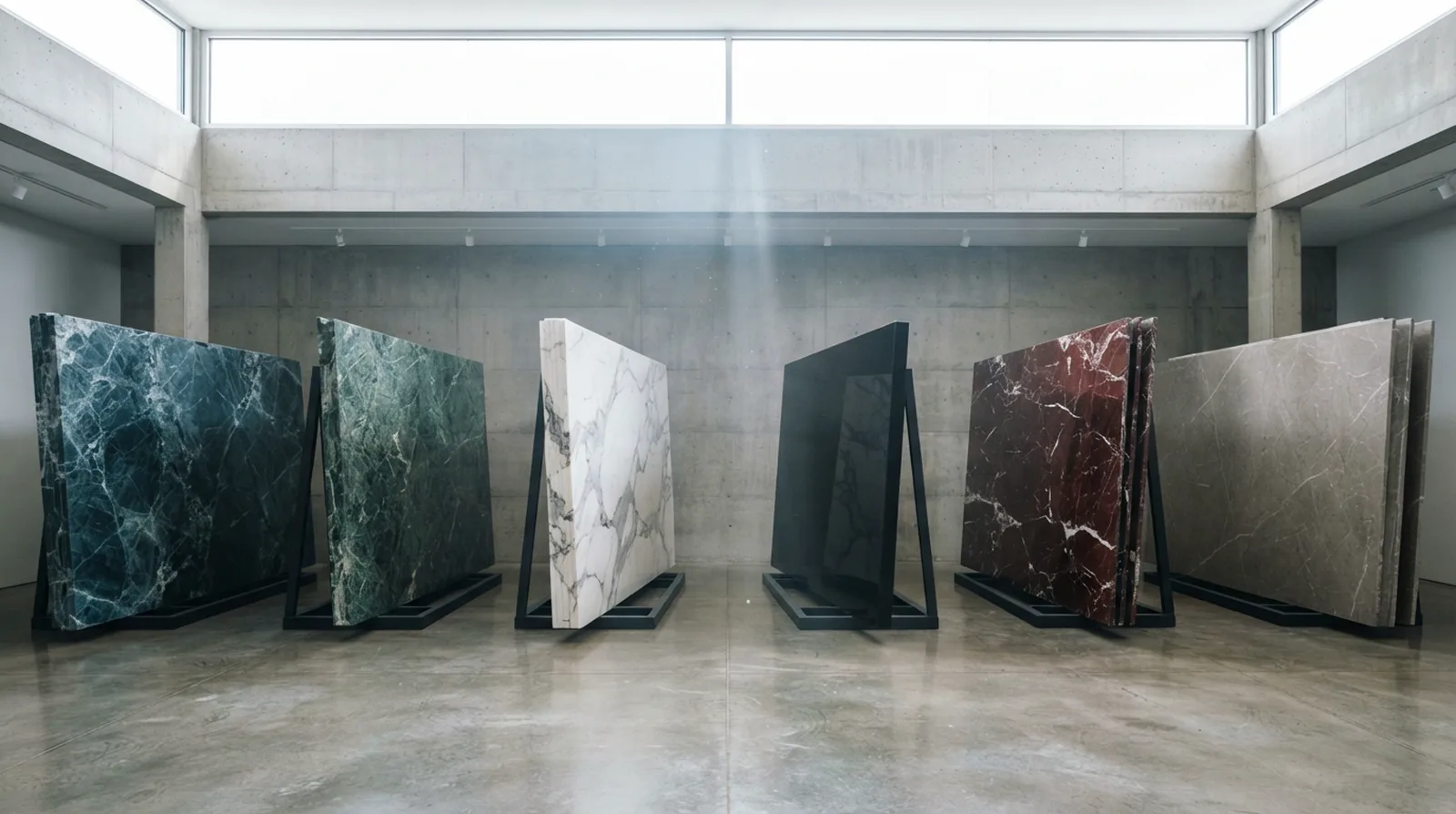
That variation is the whole point. No two kitchens, feature walls or floors ever look exactly the same. It is also the single biggest source of disappointment on site, because a customer who approved a 4-inch sample and then received a 3-metre slab was never looking at the same thing. Approve the slab, not the sample.
Approve the slab, not the sample. Every dispute in this trade starts with that one shortcut.
Natural stone is commonly specified for:
- Kitchen countertops and islands
- Flooring in living rooms, bedrooms and lobbies
- Bathroom vanities and shower walls
- Staircases and risers
- Feature walls and TV units
- Hotel lobbies and office receptions
- Outdoor paving, cladding and landscaping
- Temples and mandirs
- Luxury furniture tables, consoles, basins
Marble
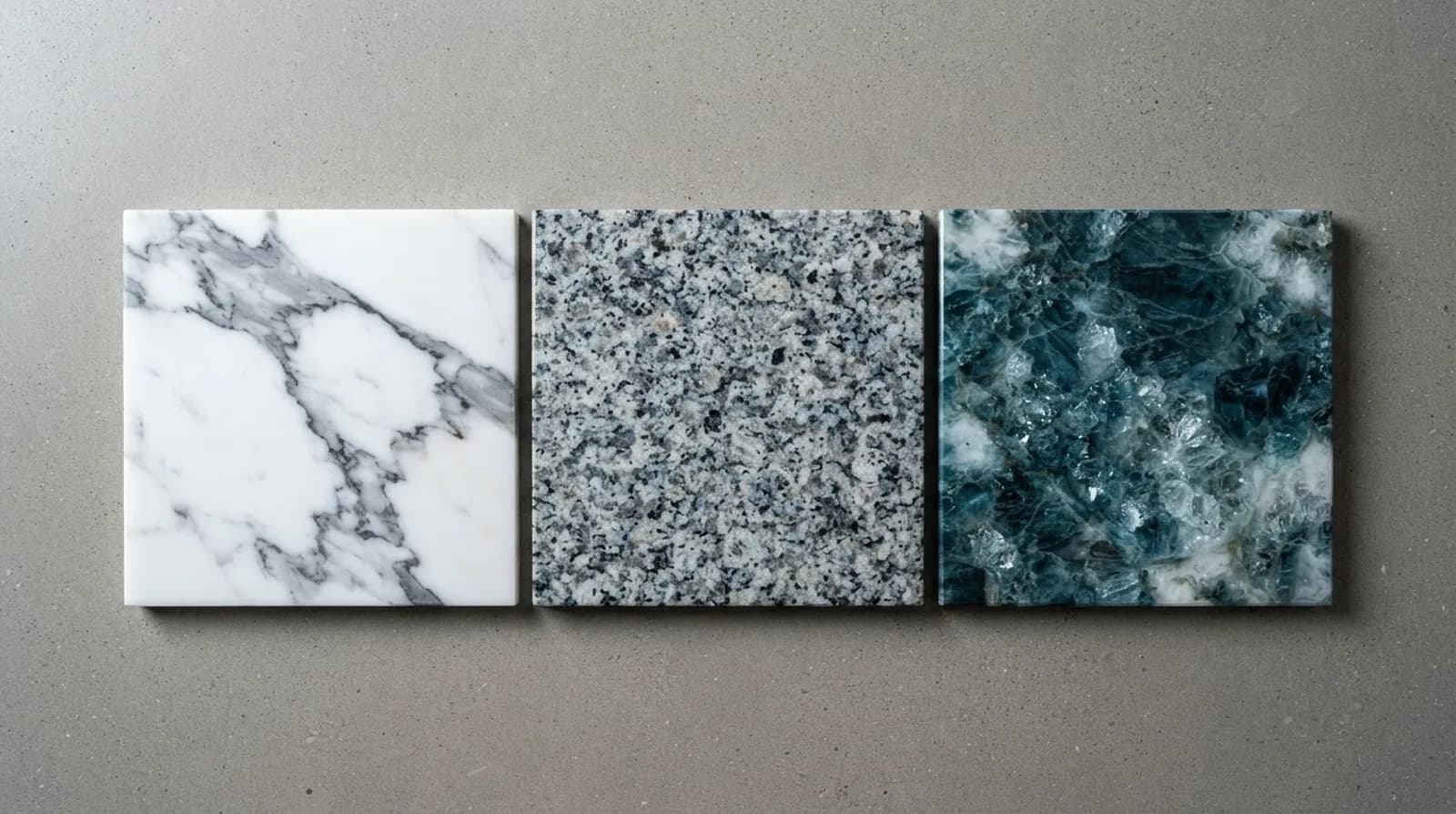
Marble is synonymous with luxury. It begins as limestone and is recrystallised by immense heat and pressure, which is what produces its flowing veins and its smooth, almost soft-looking surface. Popular choices include Italian marble, Makrana, Statuario, Calacatta, Carrara and Rainforest.
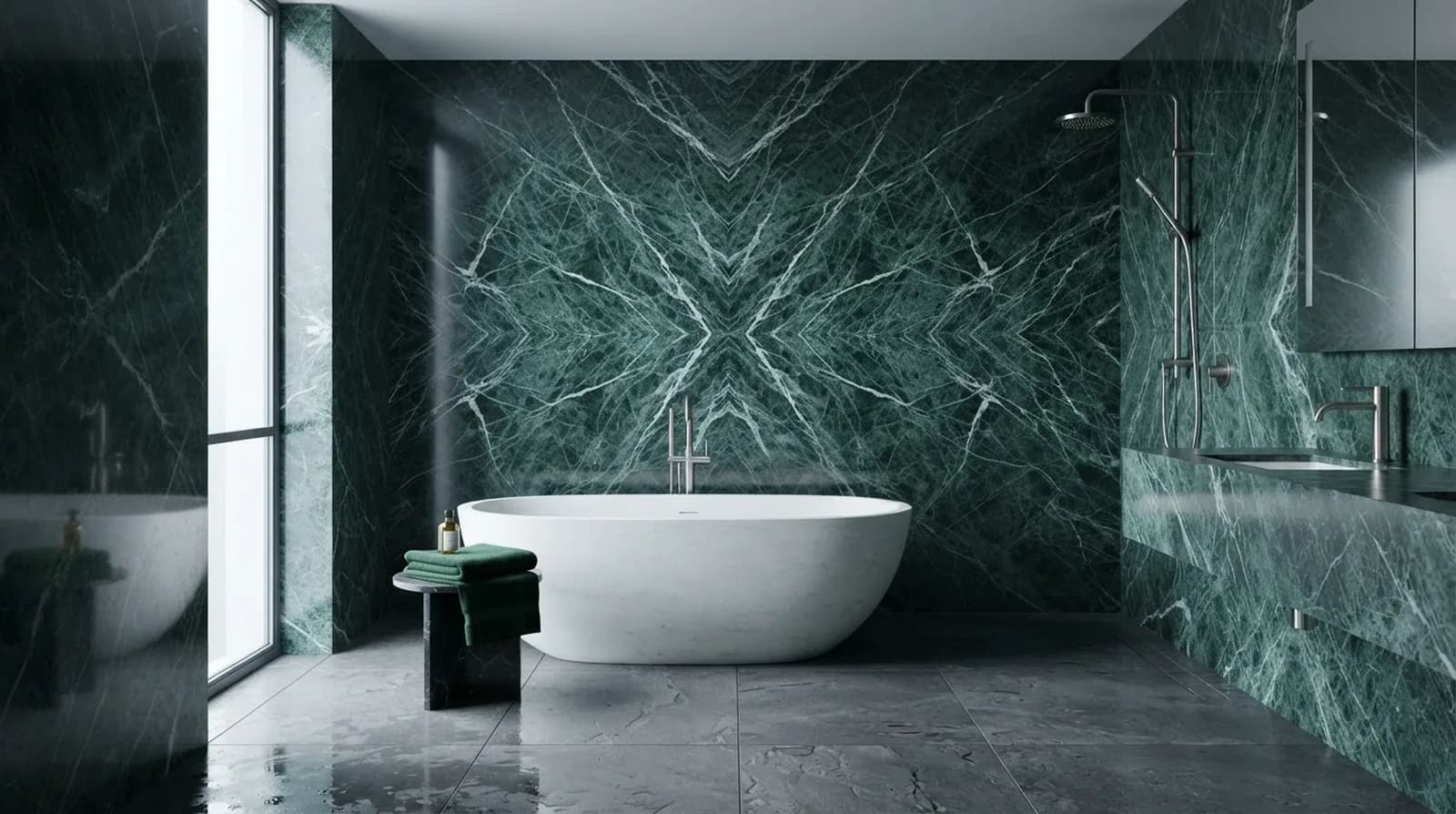
Marble is at its best in:
- Living rooms and formal spaces
- Luxury bathrooms and vanities
- Feature walls
- Staircases
- Hotel lobbies
- Mandirs white Makrana remains the traditional choice
- Premium flooring
Granite
Granite is one of the hardest natural stones in commercial use. It is igneous cooled magma so instead of veins it has interlocking crystals of quartz, feldspar and mica, which is why a polished granite sparkles under a spotlight while a marble glows.
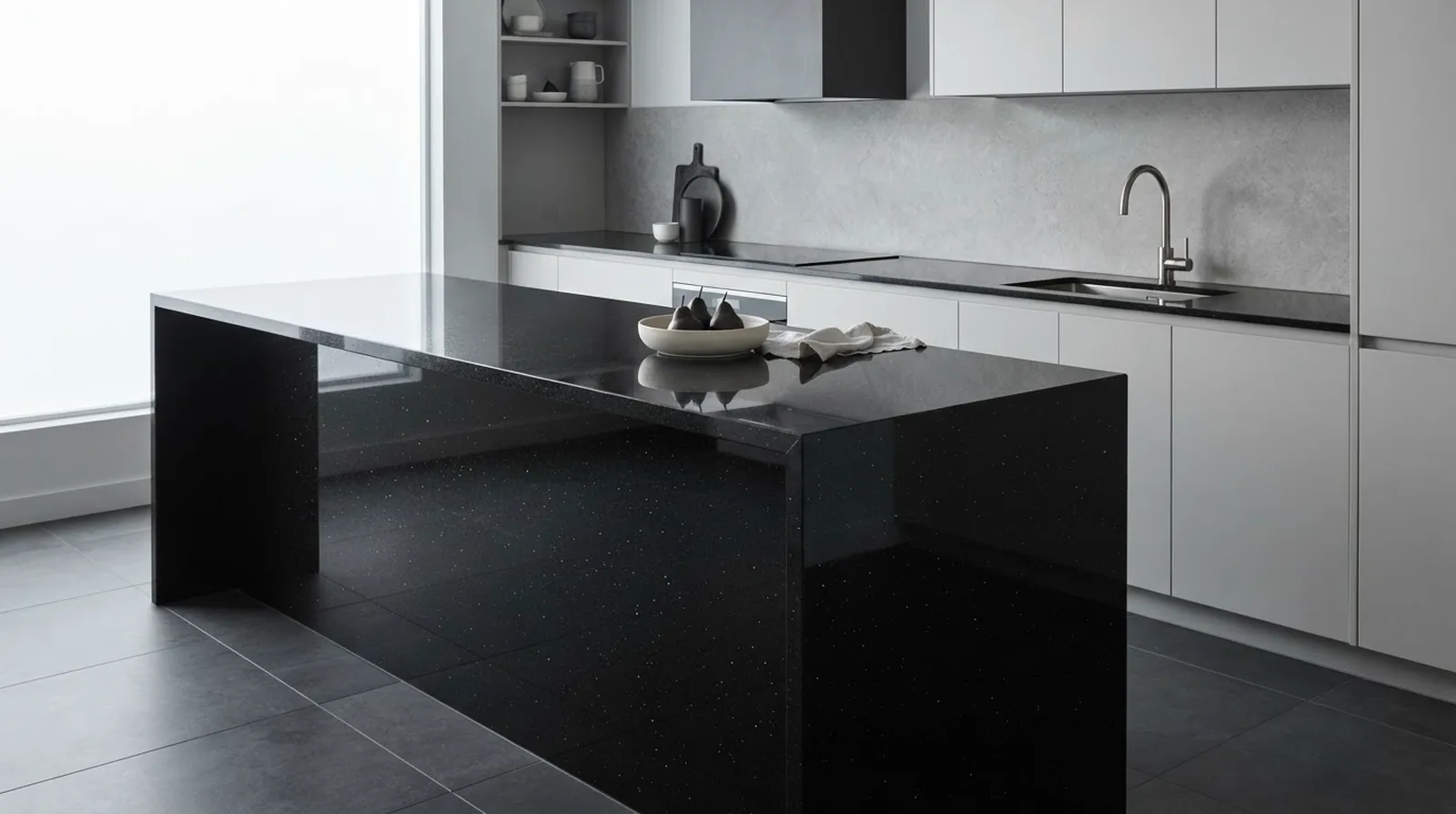
Granite is the default answer for:
- Kitchen countertops
- Commercial buildings and façades
- Restaurants and high-traffic hospitality
- Outdoor paving and landscaping
- Staircases
- High-traffic flooring
For anyone who wants a beautiful surface and does not want to think about it again, granite is still the strongest long-term investment on this list. It resists scratches, shrugs off heat, and unlike marble is unbothered by kitchen acids.
Quartzite
Quartzite is the stone that resolves the argument. It starts as sandstone, and heat and pressure fuse its quartz grains into a single interlocked mass. The result looks like marble flowing, dramatic, translucent in places and behaves like granite.
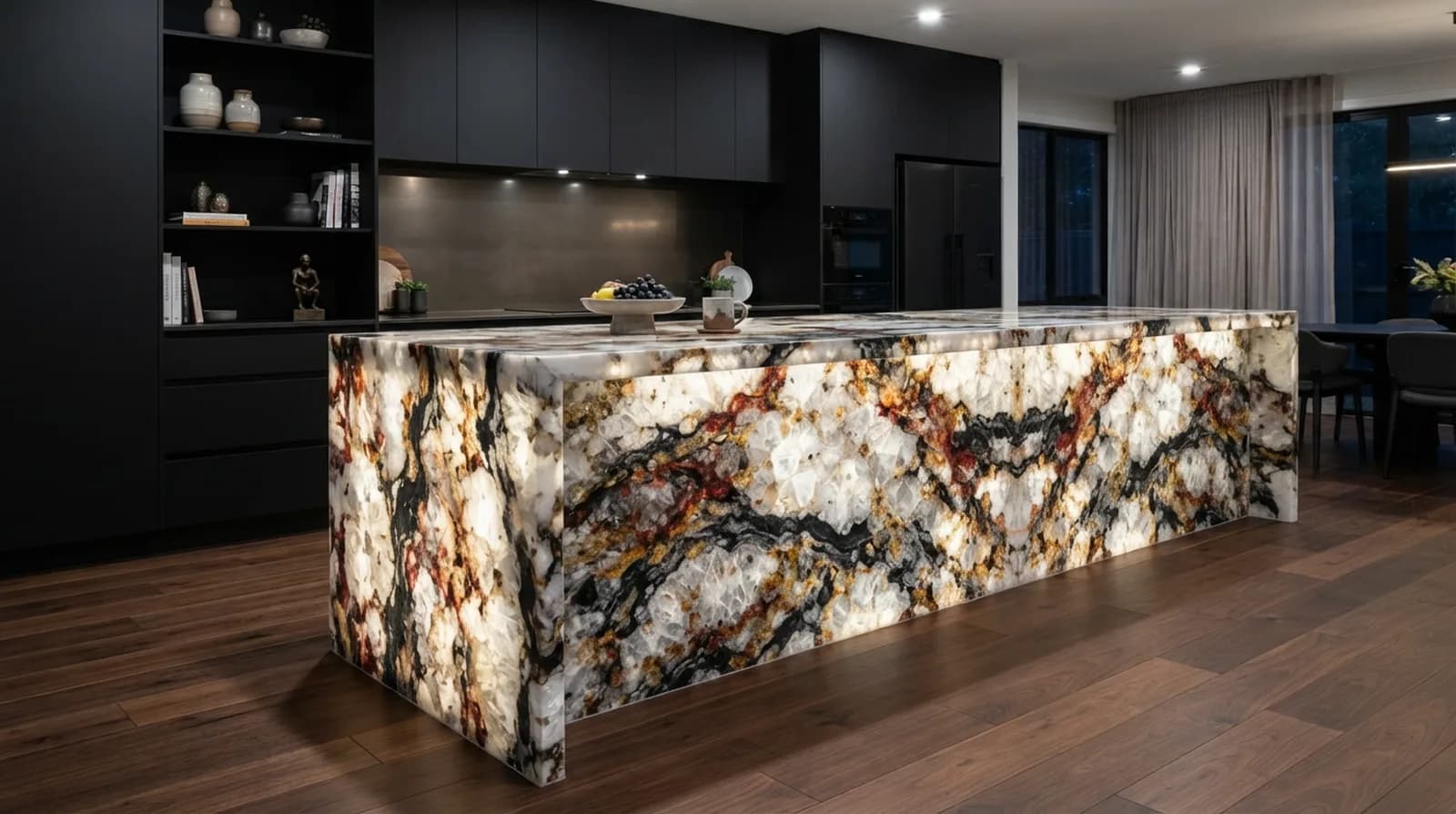
Quartzite performs exceptionally well in:
- Kitchen islands and waterfall ends
- Luxury countertops
- Bathroom vanities
- Feature walls
- Hotels, villas and premium residences
If you love how marble looks but need it to survive a working kitchen, quartzite is the balance. It is also the stone most often mis-sold, which is worth a section of its own.
Brazilian quartzite
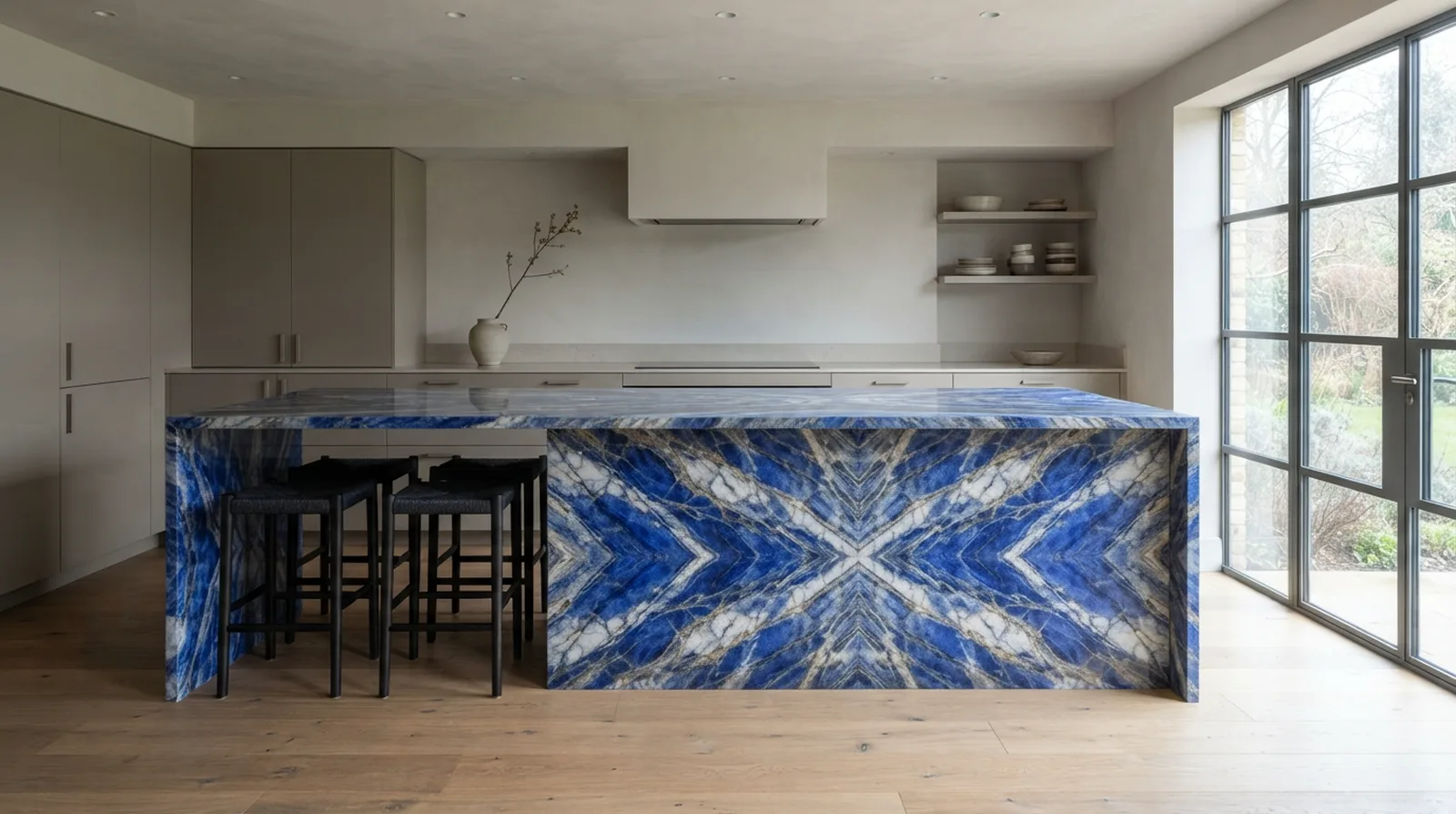
Brazilian quartzites Patagonia, Cristallo, Fusion, Explosion Blue are the most dramatic stones on the market. Deep cobalt, garnet red, translucent white crystal, black rivers. They are specified for luxury residences, five-star hotels, corporate headquarters and designer interiors, and they belong on statement installations: waterfall islands, reception desks, large feature walls.
Onyx
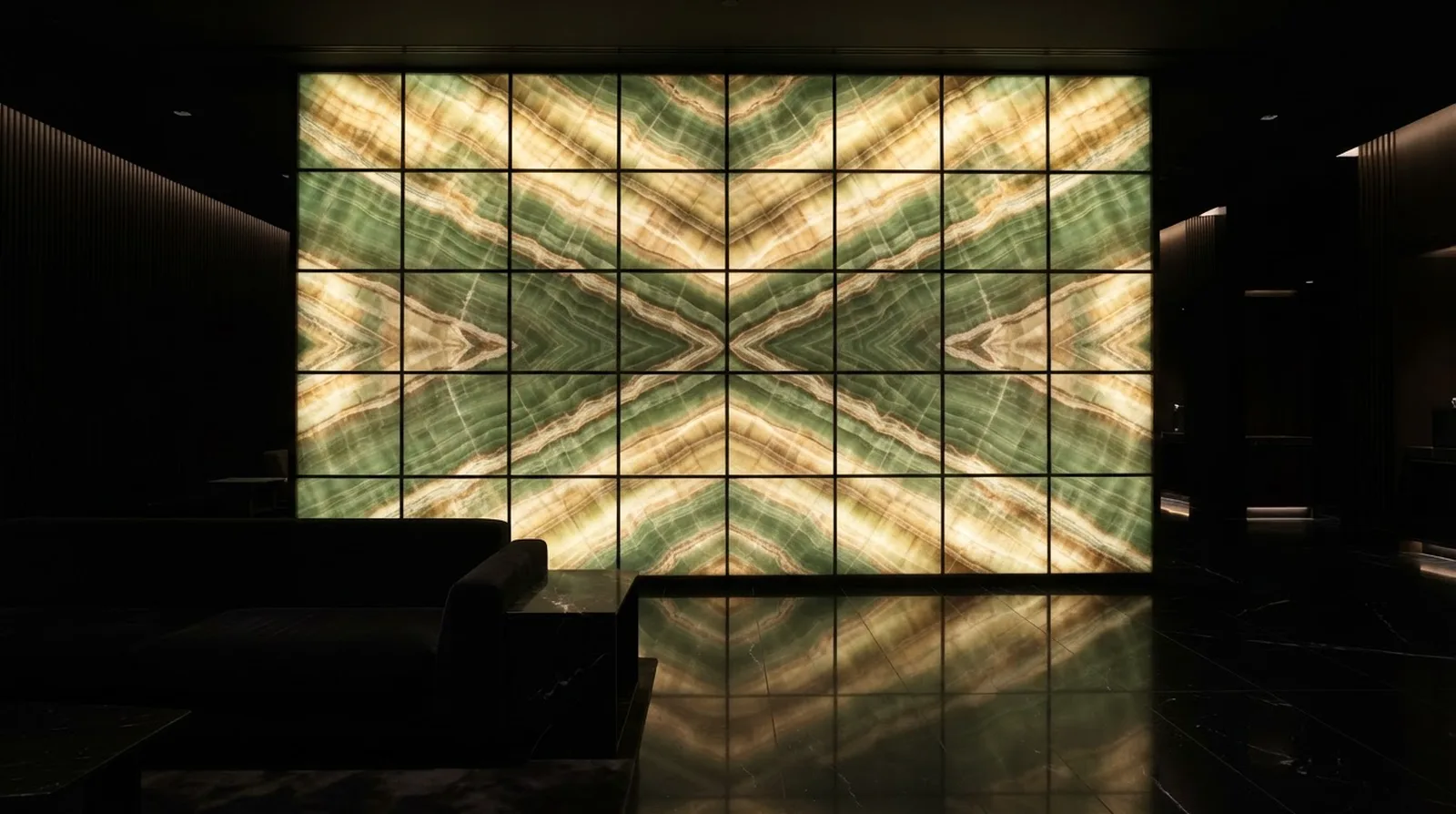
Onyx is the most decorative stone in commercial use, and the only one specified primarily for what happens when you put a light behind it. It is a banded calcite not the black gemstone of the same name and it is genuinely translucent, so a backlit panel glows with its own internal banding.
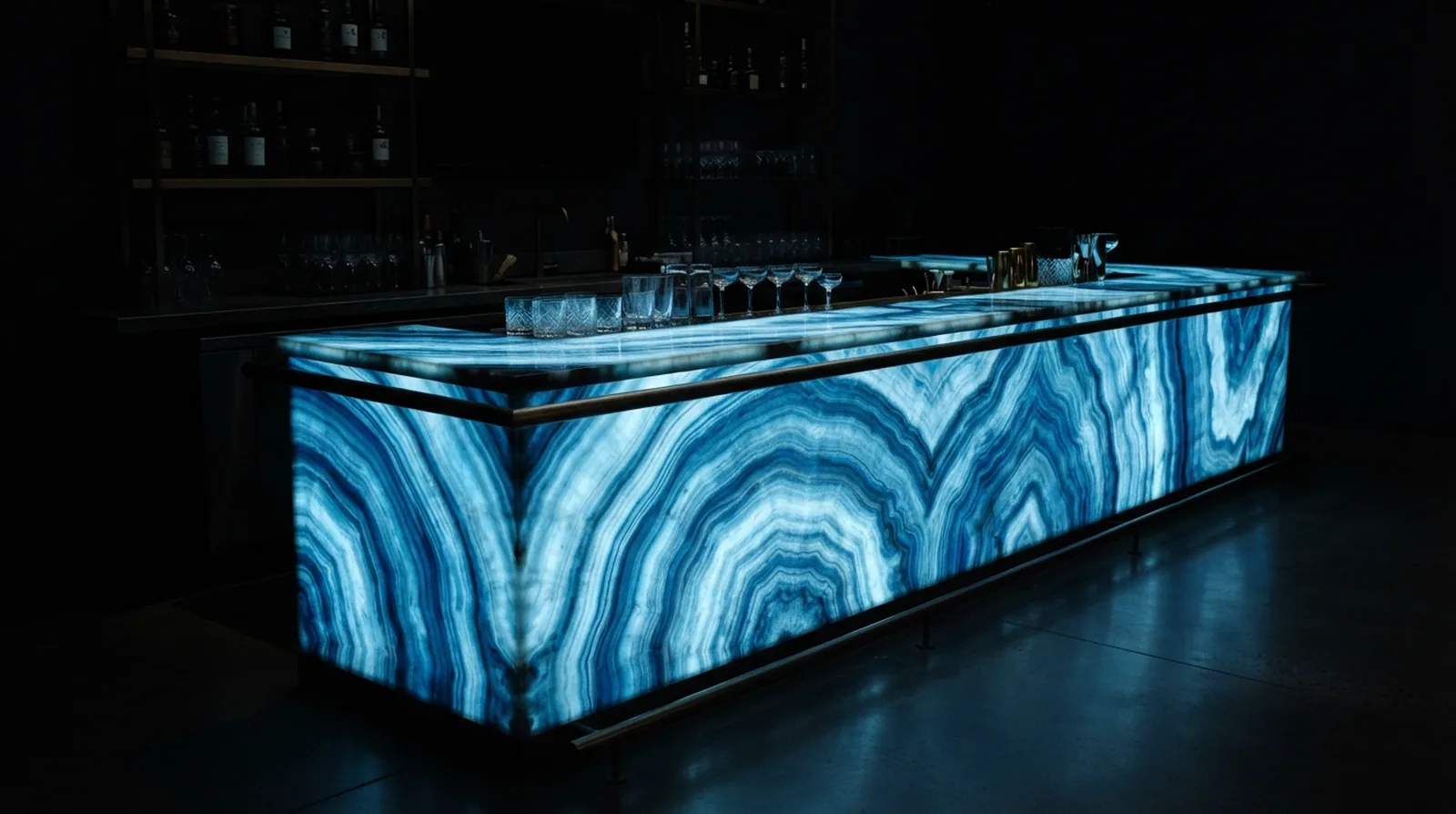
Onyx is soft and often fissured. Use it for bar fronts, reception counters, feature walls and decorative panels. Do not use it as a working countertop, a floor, or anywhere outdoors.
Keep readingRead the backlit onyx guidePanel thickness, LED spacing, the air gap that stops hotspots, and how the wall should look with the lights off.Finishes change the stone as much as the stone does
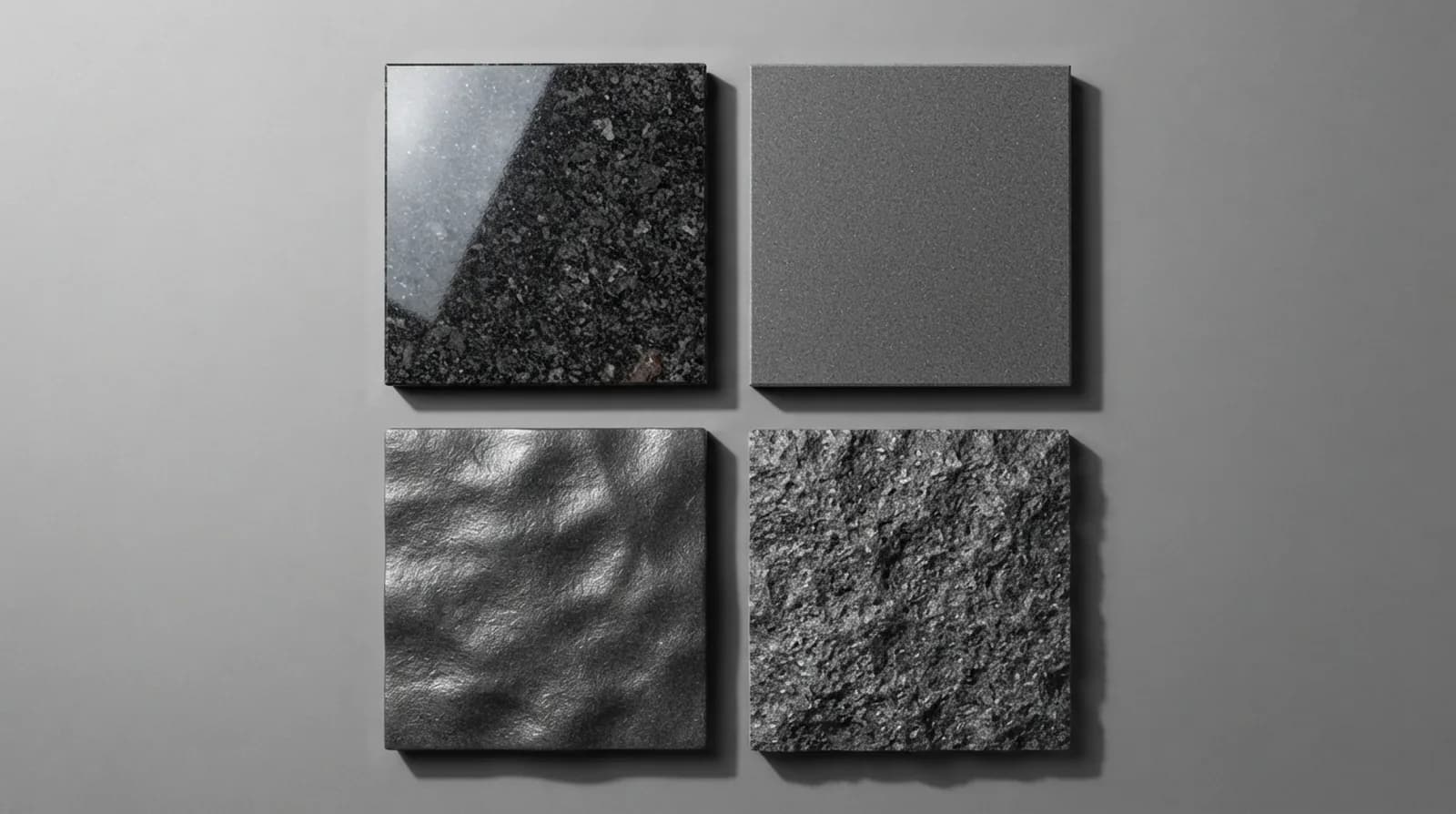
Two slabs cut from the same block can look like different materials, cost differently to maintain and behave differently underfoot, purely because of how the surface was finished. This is the part of the decision most buyers skip.
| Finish | Looks like | Best for | Watch out for |
|---|---|---|---|
| Polished | Mirror-bright, colour at its deepest | Countertops, feature walls, lobbies | Slippery when wet; shows every water spot |
| Honed | Flat matte, softer colour | Floors, bathrooms, stairs | More absorbent seal it, and marks show sooner |
| Leathered | Low sheen with a subtle ripple | Dark countertops, kitchen islands | Harder to wipe perfectly clean |
| Flamed | Rough, open, non-reflective | Outdoor paving, pool surrounds, ramps | Only granite takes it well; colour goes paler |
| Brushed / antiqued | Worn, soft-edged | Rustic floors, cladding | Not every stone holds the texture |
Marble vs granite vs quartzite
| Marble | Granite | Quartzite | |
|---|---|---|---|
| Appearance | Elegant veining | Crystalline texture | Bold natural movement |
| Luxury appeal | Excellent | Excellent | Premium |
| Scratch resistance | Moderate | Excellent | Excellent |
| Acid / etch resistance | Poor | Excellent | Excellent |
| Heat resistance | Good | Excellent | Excellent |
| Maintenance | Moderate | Low | Low |
| Kitchen use | Good | Excellent | Excellent |
| Bathroom use | Excellent | Excellent | Excellent |
| Outdoor use | Limited | Excellent | Excellent |
| Lifespan | Decades | Several decades | Several decades |
Which stone should you choose?
For homeowners
Balance beauty against how the room is actually used, not how it will be photographed. Marble for luxurious living spaces. Granite for busy kitchens. Quartzite for premium islands. Onyx for decorative accents only. A combination of two or three stones almost always produces a better interior than one stone everywhere.
For architects and interior designers
Colour is rarely the deciding factor. The questions that matter are:
- Book matching is there enough material from one block?
- Vein flow and direction across the elevation
- How the stone reads under the specified lighting, day and night
- Surface finish and slip resistance
- Material continuity between floor, wall and joinery
- Long-term durability and the maintenance the client will realistically do
Specified this way, stone stops being a surface and becomes an architectural element.
For builders and developers
Availability, consistent supply, ease of installation, durability, cost efficiency and programme dates. Granite and commercial-grade marble remain the preferred choices for large developments because they can be repeated across dozens of units without a colour break halfway through the project.
For stone dealers and fabricators
Track trending materials, real customer demand, imported collections, fast-moving colours, quality consistency and finish options. Publishing actual slab photographs and transparent specifications converts better than a catalogue of stock renders buyers have been burned by sample-versus-slab too often to trust anything else.
Best stone for every space
| Space | Recommended material |
|---|---|
| Kitchen countertops | Granite / Quartzite |
| Kitchen island | Quartzite |
| Living room flooring | Marble |
| Bedroom flooring | Marble |
| Bathroom vanity | Marble / Quartzite |
| Shower walls | Marble |
| Staircases | Granite / Marble |
| TV feature wall | Marble / Quartzite |
| Office reception | Quartzite |
| Hotel lobby | Marble |
| Restaurant | Granite |
| Outdoor cladding | Granite |
| Garden landscaping | Granite |
| Temple (mandir) | White marble |
Slabs or tiles?
The same stone is sold as both, and they are not interchangeable. A slab is a full sheet cut from the block typically around 2.5 to 3.2 metres long so the veining runs unbroken across the whole piece. A tile is cut down to a module, so a floor becomes a repeating pattern with a joint every 600 or 800 millimetres.
Slabs win wherever the pattern is the point: countertops, islands, feature walls, vanity tops. Tiles win on large floor areas, on budget, on lead time and anywhere the material has to go up several flights of stairs.
Keep readingRead slabs vs tilesJoints, wastage, labour, thickness and the questions that decide it on a real project.Before you buy: the seven questions
- Where exactly will this stone be installed and is it wet, hot, or outdoors?
- How much daily wear will it take, and from whom?
- What maintenance will actually happen, honestly, in this household?
- Will it see direct sunlight, standing water, or freeze-thaw?
- Is the finish right for the application, or just right for the photograph?
- Have you seen and marked the actual slab, not a sample chip?
- Does the supplier give consistent quality, transparent pricing and a named quarry or lot?
Frequently asked questions
- Which natural stone is best for kitchens?
- Granite and quartzite. Both offer excellent heat resistance, high scratch resistance and low maintenance, and neither etches when acidic food is spilled on it.
- Is marble suitable for bathrooms?
- Yes. Marble is one of the most popular materials for luxury bathrooms, vanities and shower walls. Use a honed finish on floors for slip resistance, seal it on installation, and keep acidic cleaners away from it.
- Which stone requires the least maintenance?
- Granite. Among the commonly used natural stones it is the least porous, the least reactive and the most forgiving of ordinary household use.
- Can natural stone be used outdoors?
- Yes. Granite and quartzite perform exceptionally well outdoors thanks to their durability and resistance to weather. Use a flamed or leathered finish for grip, and avoid polished marble outside it dulls and can stain.
- Are all slabs identical?
- No. Every slab is unique in colour, veining, texture and mineral composition. Always inspect and approve the actual slab before purchase, and ask for it to be marked and reserved in your name.
- How thick should a stone slab be?
- 16–18 mm is standard for cladding and light-duty surfaces; 20 mm is the usual countertop thickness; 30 mm is specified where the edge needs presence or the span is unsupported. Thicker is not automatically better it is heavier, more expensive to lift and needs more support beneath it.
Final thoughts
Natural stone is more than a building material it is an investment in beauty, durability and timeless design. Whether you are renovating a home, designing a luxury villa, planning a commercial development or sourcing for clients, understanding what each stone actually does is what turns a nervous purchase into a confident one.
Marble offers unmatched elegance. Granite delivers exceptional durability. Quartzite combines the two. The right choice comes down to how the space will be used, your design intent and how much maintenance you genuinely want to take on.
At Stonamart we make sourcing simple and transparent: verified suppliers, real slab photographs, premium collections and a direct line to trusted dealers across India. Homeowner, architect, builder or dealer find the right stone for the project, and see it before you commit to it.