Brazilian Quartzite: Patagonia, Cristallo, Fusion and Explosion Blue
The most dramatic stone on the market, and the one most likely to go wrong on site. What to check before you commit to a block.
7 min read
In this guide
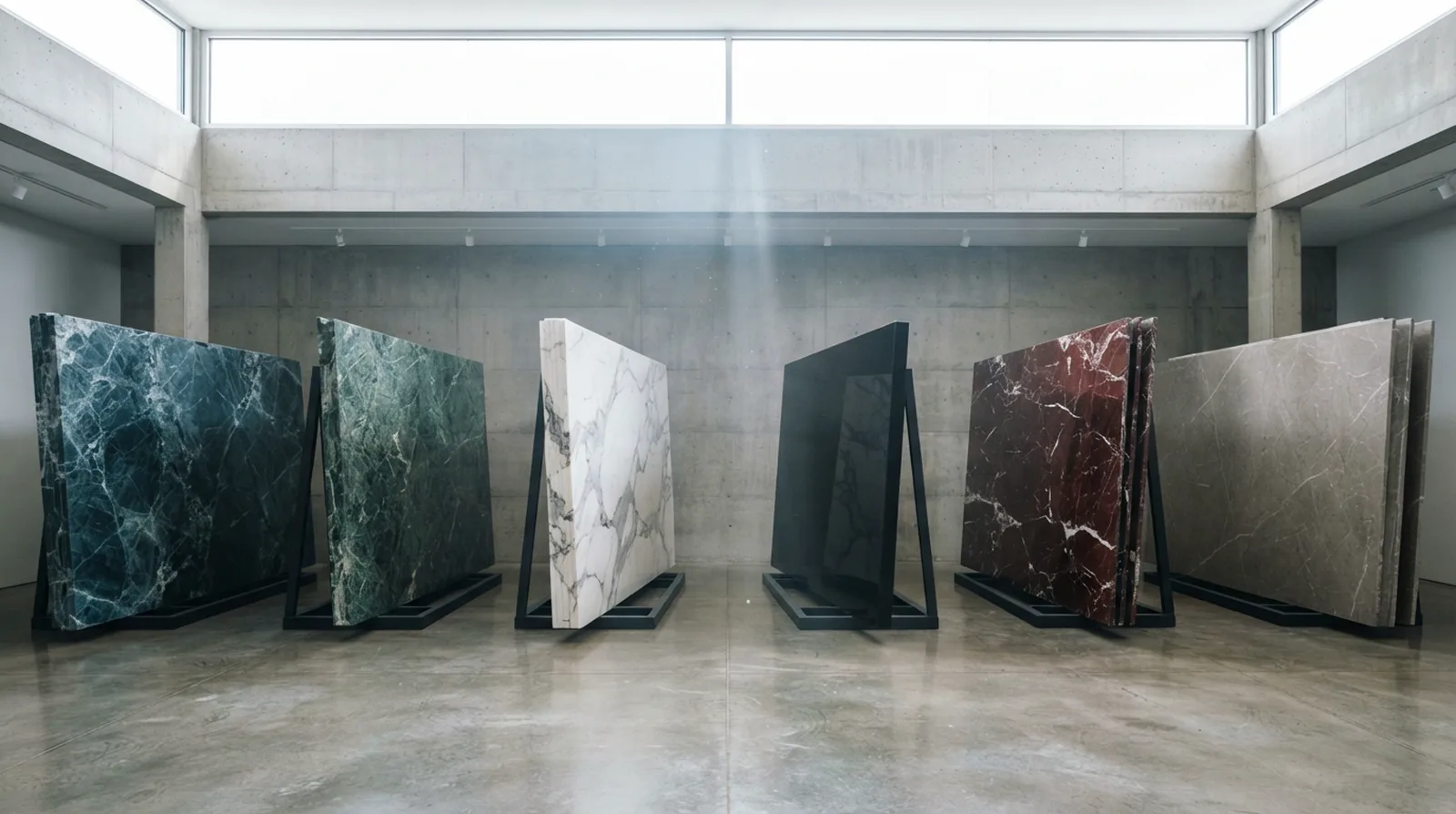
Brazil produces the most spectacular natural stone in commercial circulation. Not the most useful, not the best value the most spectacular. A single Patagonia slab can carry translucent quartz clusters the size of a fist, and an Explosion Blue island will end an argument about whether a kitchen needs a focal point.
These stones are also where the most money gets lost. They are bought on a phone photograph, shipped across an ocean, and discovered to be softer than expected, more fissured than expected, or a different stone entirely. This guide is about not doing that.
The four names you will hear
Patagonia
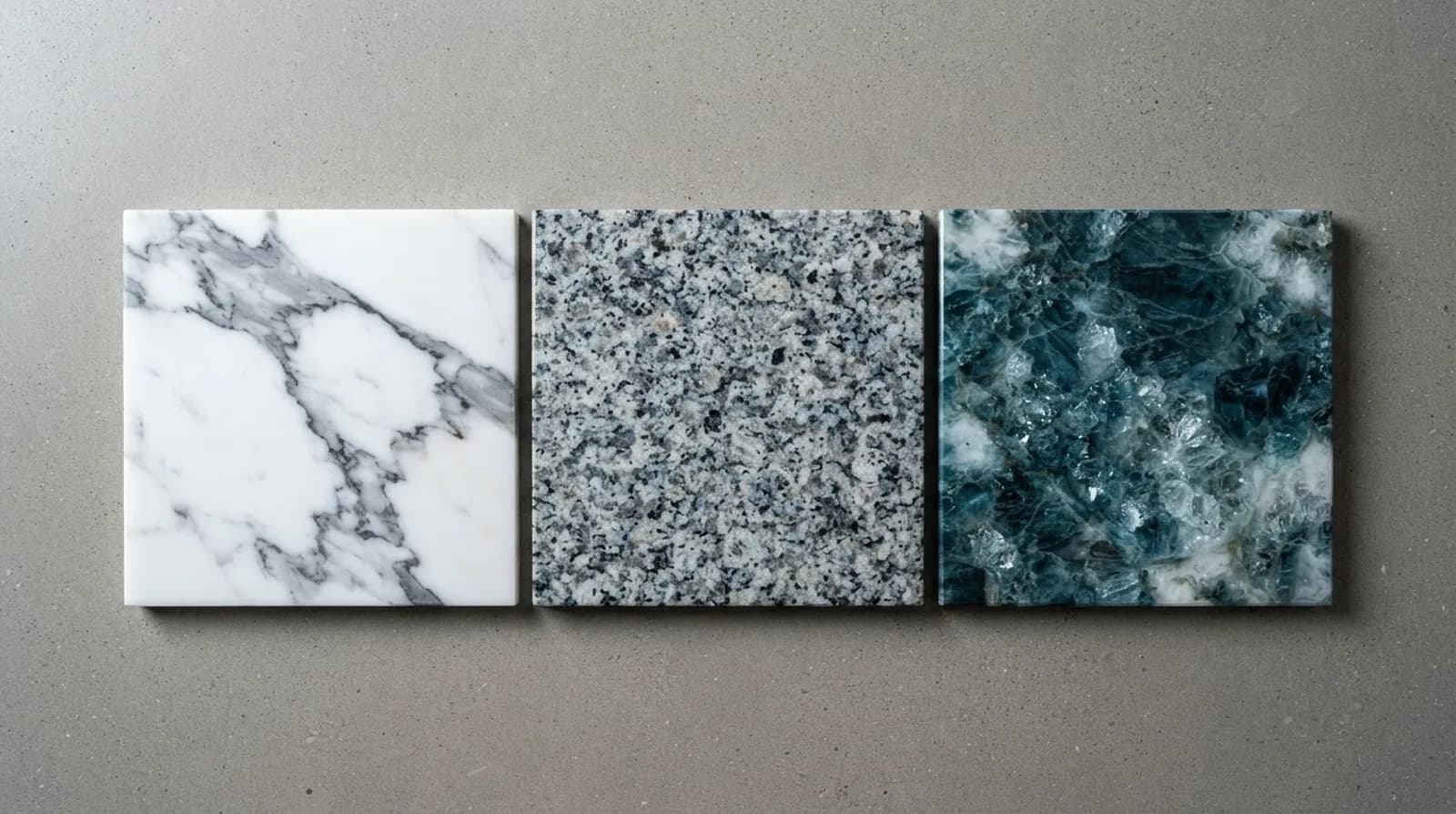
Large translucent quartz crystal clusters on a pearl-white ground, cut through with garnet-red, amber and charcoal-black mineral rivers. No two slabs are remotely similar. Patagonia is a feature material an island face, a bar front, a single wall and it is usually backlit or at least edge-lit to bring the crystal alive.
Cristallo
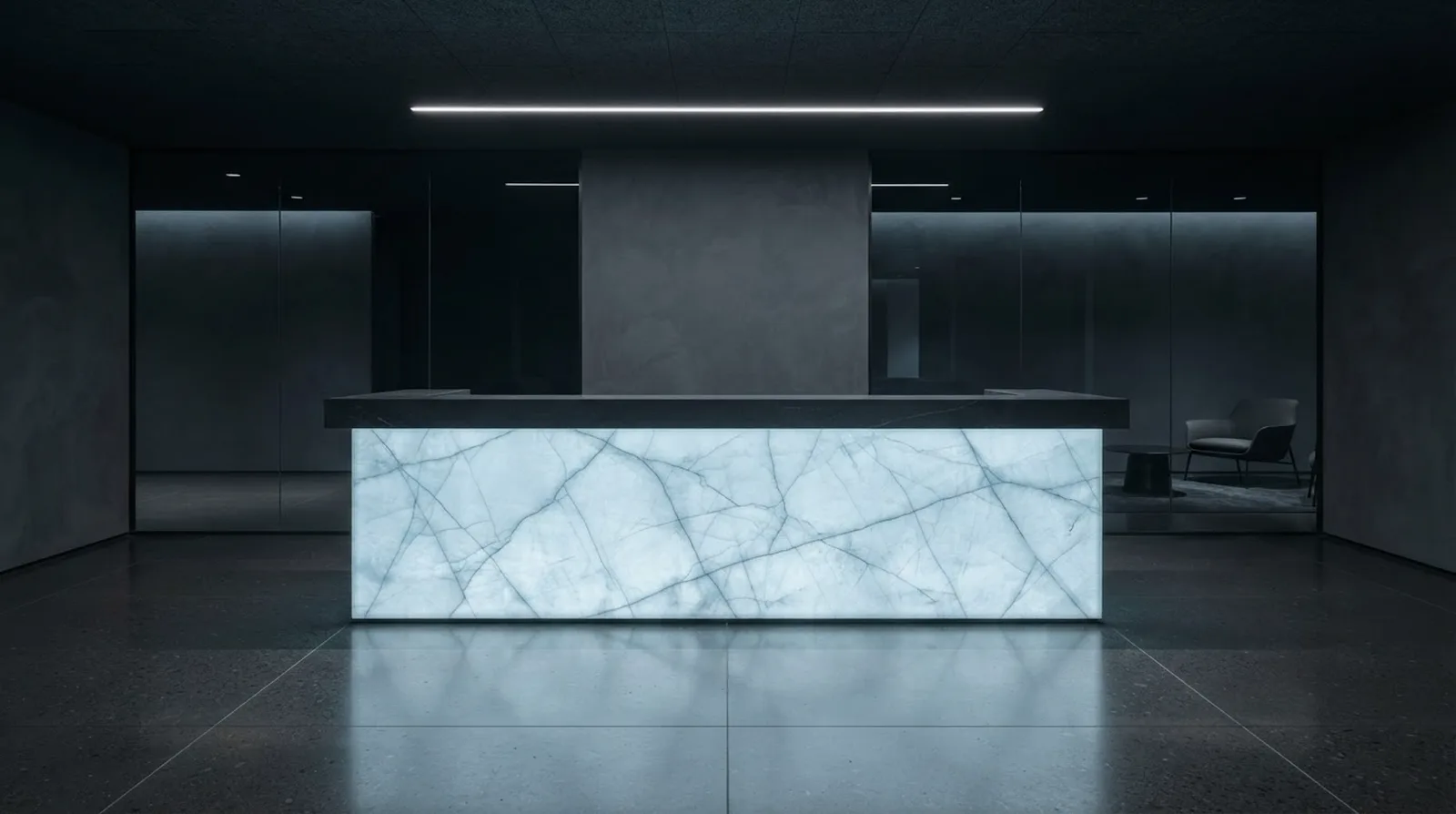
The rarest of the four. Almost glass-clear white with faint icy fracture lines, and genuinely translucent through the full slab thickness. Cristallo is specified for backlit reception desks, bar counters and feature panels, and its price reflects both the rarity and the wastage the fissuring means a lot of a block never becomes a saleable slab.
Fusion
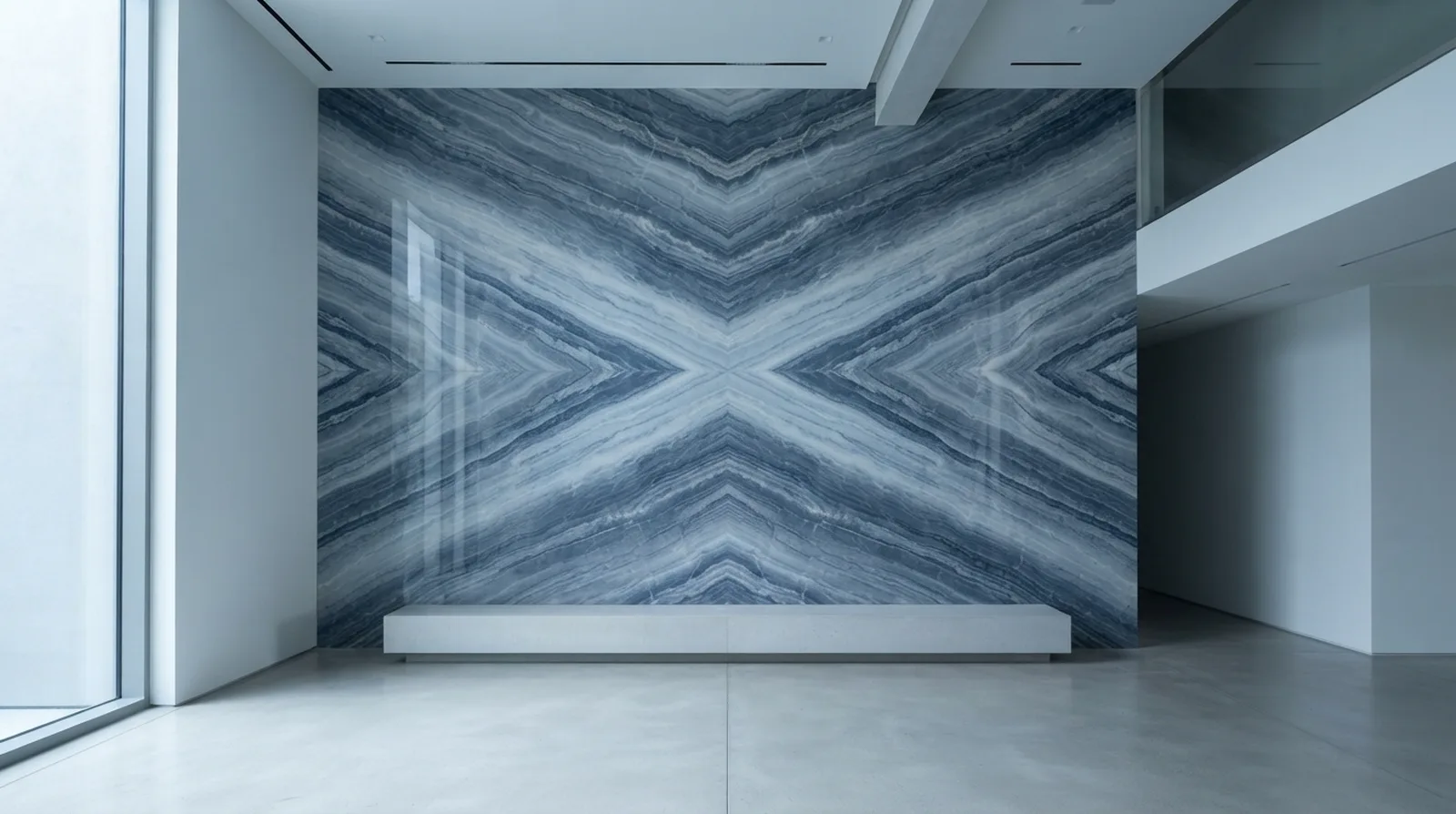
Bands of rust, copper, teal and black moving diagonally across the slab in a way that looks painted. Fusion is one of the few stones where the vein direction genuinely changes the design, so it is worth agreeing whether the pattern runs horizontally or vertically before the block is cut.
Explosion Blue
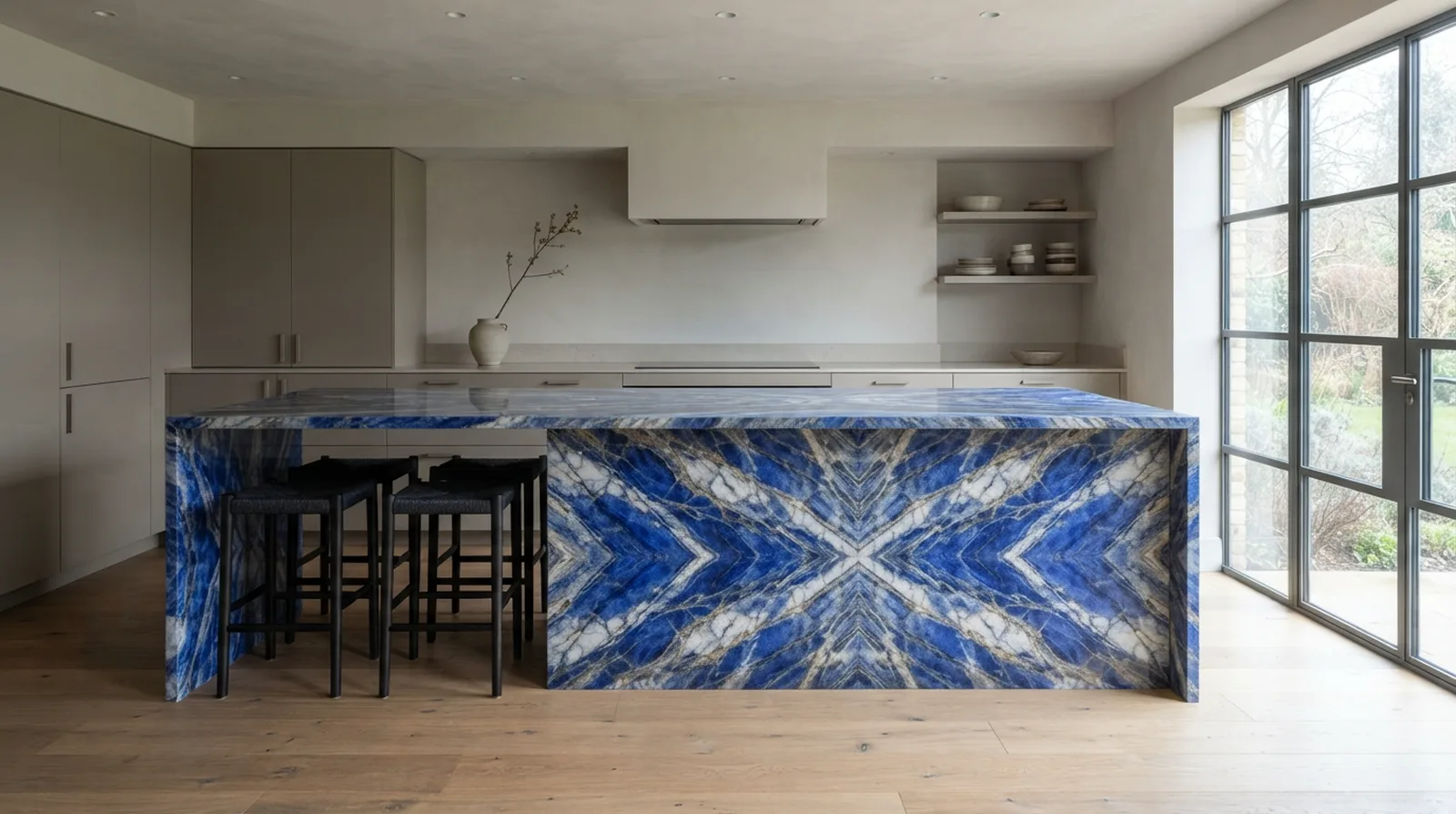
Intense cobalt and cerulean with white quartz veining radiating outward. Book-matched across an island it produces a single symmetrical event. It is one of the very few genuinely blue natural stones, and it is priced accordingly.
The hard truth: some of it is not quartzite
A significant share of stone sold as quartzite is dolomitic marble. It is not always deliberate deception the trade names travel faster than the geology, and a quarry-side name sticks. But the difference matters enormously, because a dolomitic marble on a kitchen island will etch, and the client was promised it would not.
Neither test is a laboratory result, and both are far better than trusting a name. A reputable supplier will run them with you rather than object to them.
Buy the block, not the slab
The most common regret on these stones is not quality it is running out. A kitchen that needs an island, a return, a splashback and a shelf needs those pieces to come from consecutive slabs in the same block, because slab 4 and slab 14 of the same block can look like different stones.
Reserve the whole block or the specific consecutive slabs, in writing, with the slab numbers recorded. Photograph them wet wetting a slab approximates the polished appearance and reveals fissures that a dry surface hides.
Resin, mesh and fissures
Almost every exotic quartzite arrives resined, and most are mesh-backed. This is normal and not a defect the resin fills micro-fissures and the mesh holds the slab together in transit and handling. What matters is that you know, because it changes three things:
- Mesh-backed slabs cannot be used where the underside will be visible, such as an unsupported overhang seen from below.
- Heavily resined surfaces can respond differently to heat than the raw stone worth a note to the client on an island with a hob.
- A fissure is not a crack. Fissures are natural mineral boundaries and are structurally normal; a crack crosses those boundaries. Ask the fabricator to point out which is which on your actual slab.
Where these stones work and where they do not
| Application | Verdict | Note |
|---|---|---|
| Kitchen island / waterfall | Excellent | The single best use. Book-match the return. |
| Bar front, backlit | Excellent | Cristallo and Patagonia specifically |
| Reception desk | Excellent | Plan the unlit appearance too |
| Feature wall | Excellent | Needs a quiet room around it |
| Bathroom vanity | Very good | Verify it is genuine quartzite first |
| Full-floor flooring | Poor | Cost and pattern chaos; use a calmer stone |
| Outdoor cladding | Situational | Genuine quartzite is fine; resined surfaces can chalk in strong UV |
| Repeated across many units | Poor | Supply cannot be matched at volume |
The buying checklist
- See the slab wet, in daylight, and photograph it whole.
- Run the scratch and acid tests on an offcut.
- Record slab numbers and reserve consecutive slabs from one block.
- Confirm resin and mesh backing in writing.
- Agree the vein direction and the book-match layout before cutting.
- Ask the fabricator to mark fissures on your slab and confirm the cutting plan around them.
- Get a delivered-and-fixed price exotic quartzite fabrication costs more than marble.
Frequently asked questions
- Is Brazilian quartzite worth the price?
- For a feature installation, often yes there is no engineered product that reproduces a Patagonia or Explosion Blue slab, and it is a permanent element of the room. For large repeated floor areas, no. The cost and the pattern variation both work against you.
- Can quartzite be backlit?
- Some of it. Cristallo and the paler Patagonias are translucent enough at 20 mm. Most darker quartzites are not. Always test with a light behind the actual slab before you specify backlighting.
- Does quartzite need sealing?
- Yes on installation and typically every two to four years after, depending on the stone and its use. It is low-porosity, not zero-porosity.
- How do I know my supplier's quartzite is genuine?
- Ask them to run the scratch and acid tests with you on an offcut, and ask for the quarry name and block number. Anyone who declines both is not the supplier for a purchase at this price.