The Room-by-Room Stone Specification Guide
Fourteen spaces, one recommendation each, the reason behind it, and what to fall back on when the first choice is unavailable.
8 min read
In this guide
Choosing stone room by room is easier than choosing it in the abstract, because a room answers most of the question for you. Before the list, three questions that will resolve any space not covered here.
- Wear will anything be dragged, dropped, cut or walked on this surface? If yes, hardness matters and marble drops down the list.
- Water and acid is it wet, and will food or cleaning chemicals reach it? If yes, porosity and acid resistance decide it.
- Light is this surface the thing people look at, or the background? Feature surfaces earn dramatic stone; backgrounds should be calm.
Wear, water, light. Three questions, and almost every room answers itself.
Kitchen countertops
Granite or quartzite. This is the single least negotiable recommendation in the guide. Kitchen worktops meet heat, knives, lemon juice, wine, turmeric and oil often in the same hour. Both stones are acid-proof and heat-proof; both take that abuse without changing.
Marble on a working countertop is a lifestyle choice, not a specification. It will etch. Some people love the resulting patina; a client who was not warned will not.
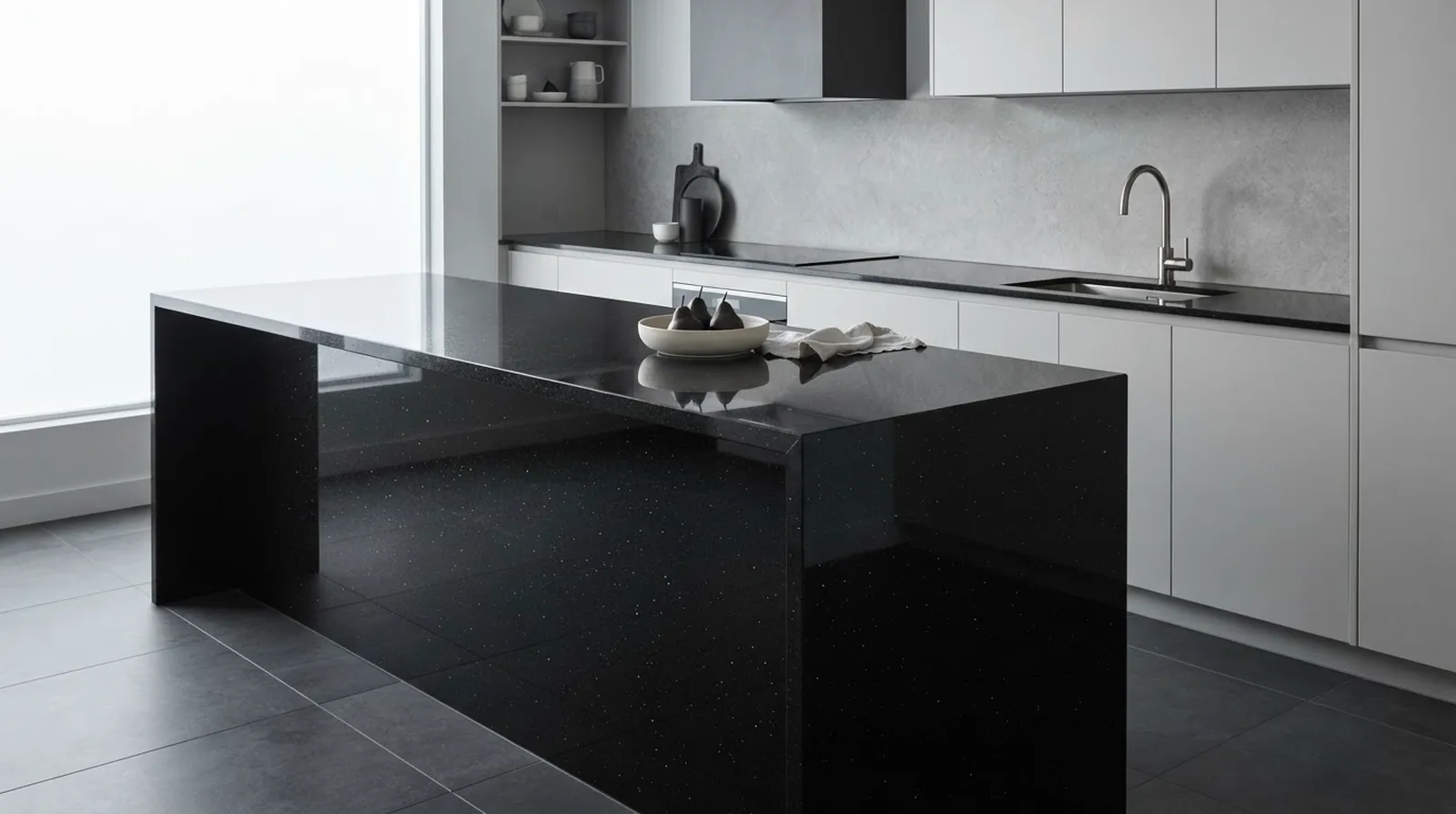
Kitchen island
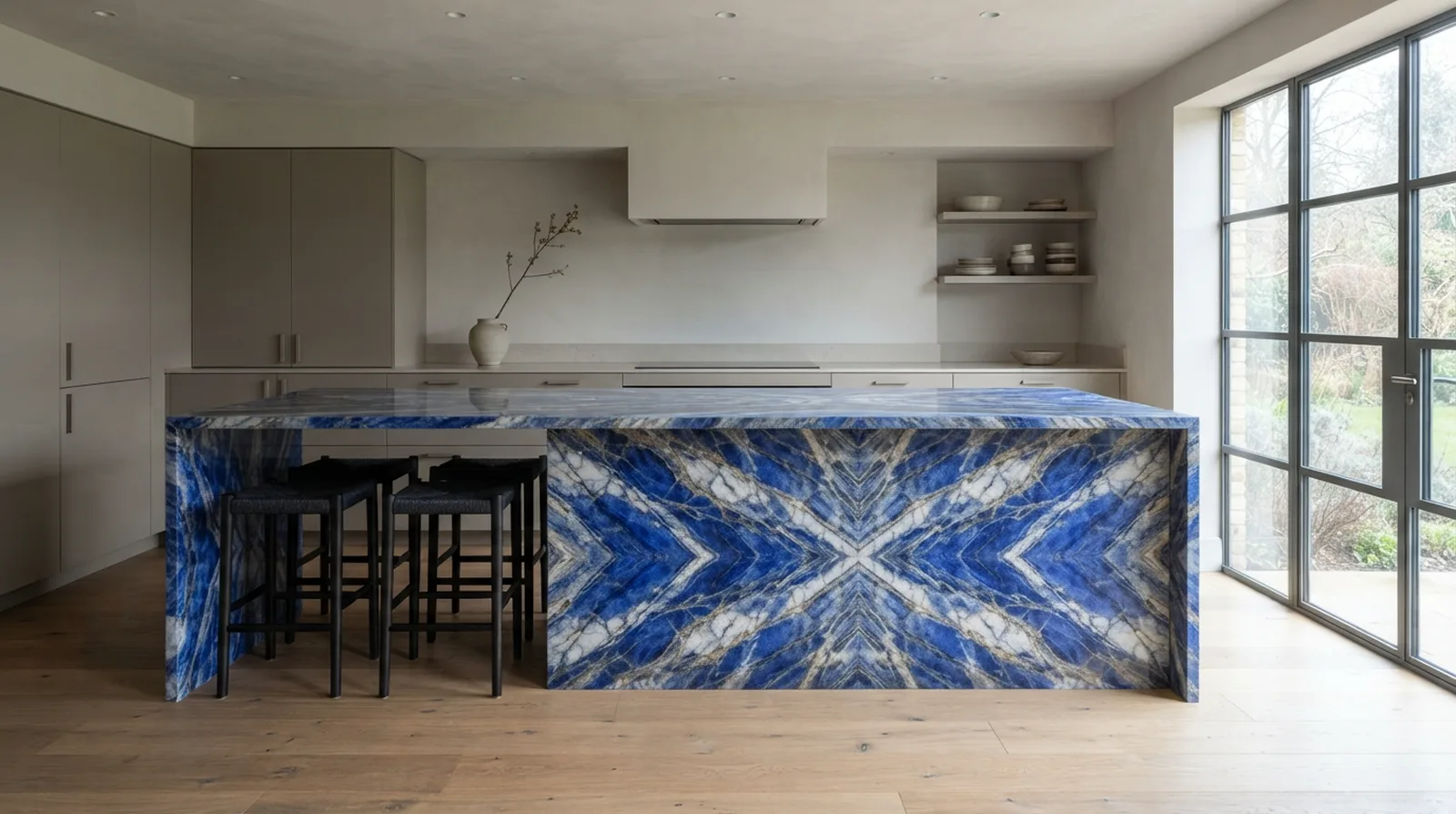
Quartzite. The island is the one surface in the kitchen that is looked at from every angle, so it earns the dramatic stone and quartzite delivers drama without giving up durability. Book-match it across the top and down the waterfall end, and reserve consecutive slabs from one block.
Second choice: a bold granite. Avoid marble here for the same reason as the countertops.
Living room flooring
Marble. Large-format marble flooring is calm, cool underfoot in Indian summers, and it is the classic reason people specify stone at all. Choose a honed or lightly polished finish rather than a mirror polish a polished floor is slippery and shows every scuff.
Second choice: a pale granite, which will take more traffic with less care.
Bedroom flooring
Marble. Low traffic, no water, no acid the room where marble is under the least stress. A softer, warmer marble works here even if it would be a poor choice elsewhere in the house.
Bathroom vanity
Marble or quartzite. A vanity top sees water and cosmetics but not cooking acids, so marble is genuinely appropriate. Seal it and keep acidic cleaners off it. Where the bathroom is heavily used or shared, quartzite is the lower-maintenance answer for the same look.
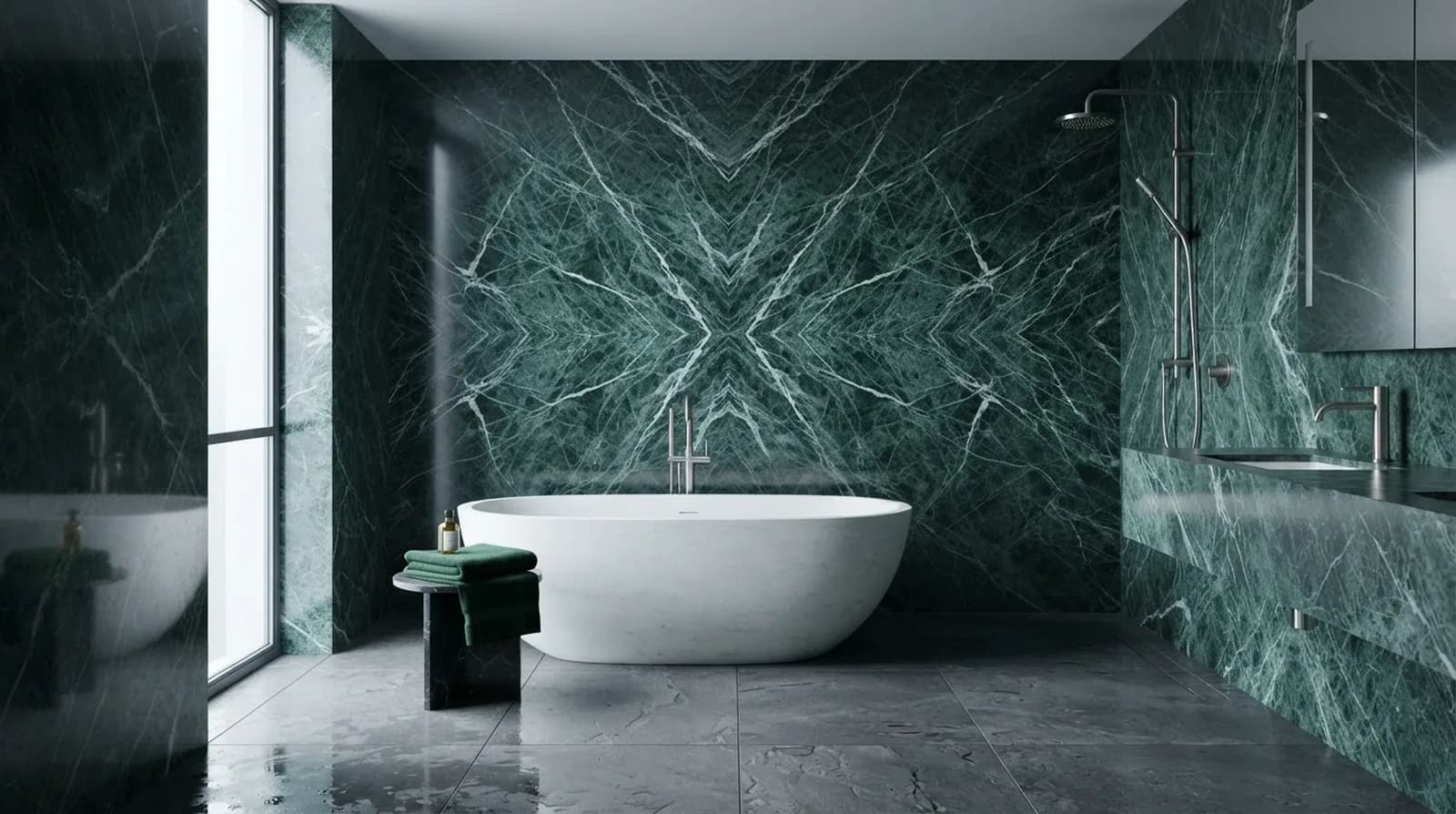
Shower walls
Marble. Vertical, no wear, and the surface where book-matching reads most dramatically. Seal it properly, use an epoxy grout, and specify a honed finish on the shower floor for grip.
Staircases
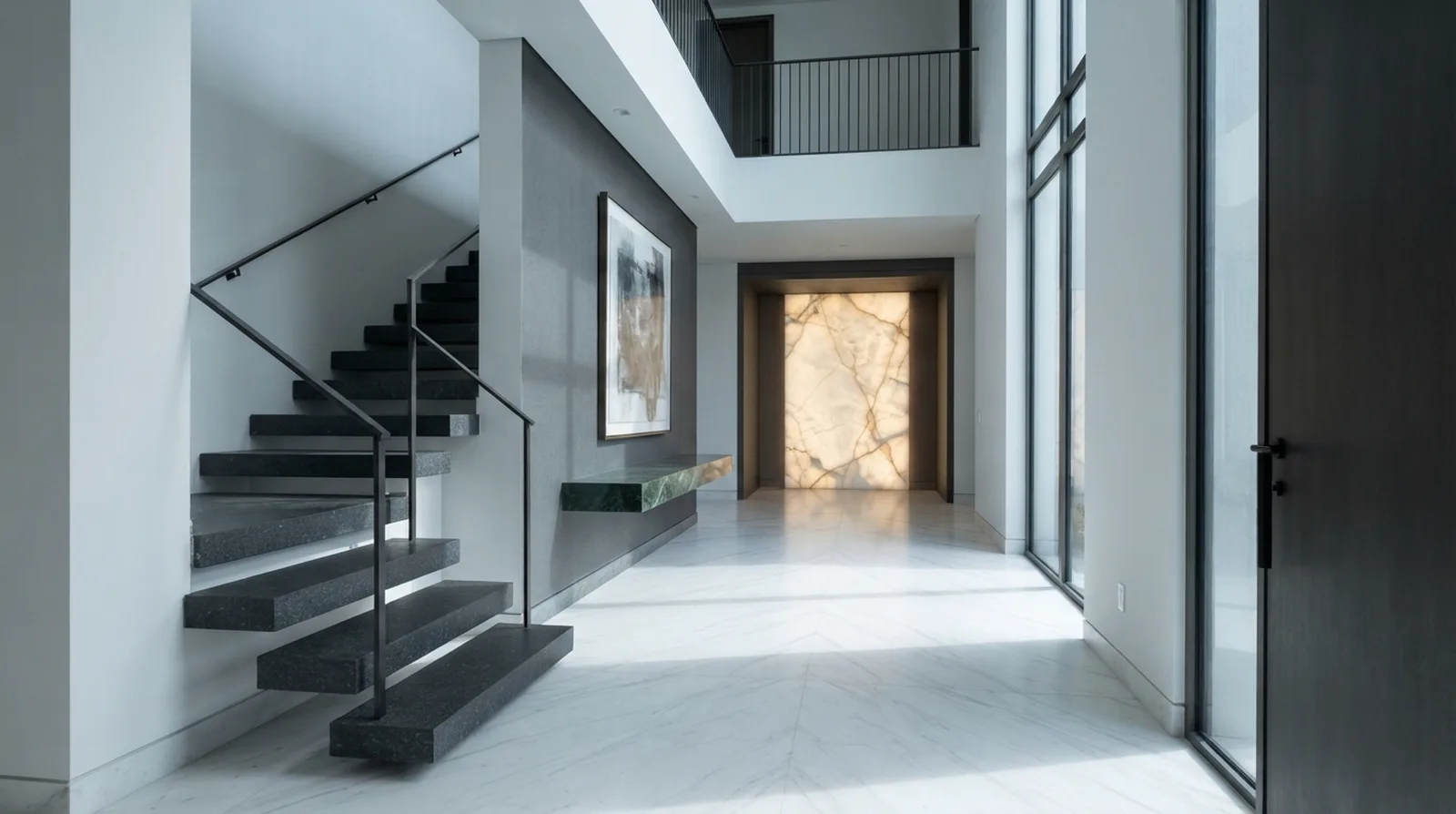
Granite for treads, marble if the look demands it. Stair nosings take concentrated wear and grit, and granite handles both. If the design calls for marble, keep the tread in one piece with no joint, specify a honed finish, and accept that the nosing will need attention eventually.
Do not use tiles on treads. A joint mid-tread is both a visual break and a weak point.
TV feature wall
Marble or quartzite, book-matched. This is a pure display surface zero wear, zero water so the only criterion is how spectacular the stone is. It is the right place for the slab you fell in love with and could not justify in the kitchen.
Office reception
Quartzite. A reception desk is a brand statement that also gets bags dropped on it, elbows leaned on it and cleaning products wiped across it every night. Quartzite survives that; marble does not. Backlighting a translucent quartzite front is one of the highest-impact details available in a commercial fit-out.
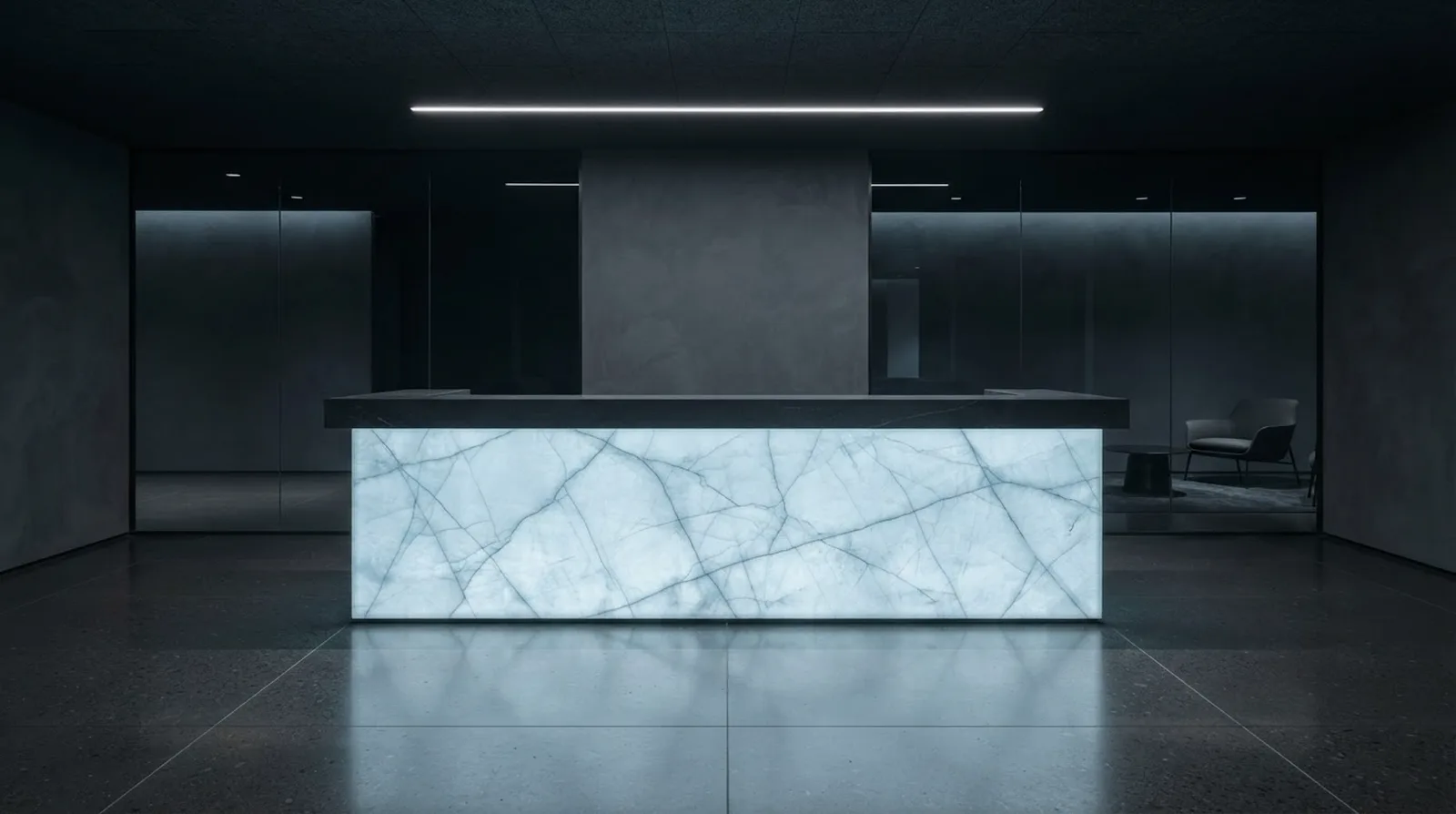
Hotel lobby
Marble and this one is a deliberate exception to the wear rule. Lobby marble is chosen for how it makes an arrival feel, and hotels budget for maintenance. Use large formats, a honed finish, and plan a periodic repolish into the operating budget from day one.
Restaurant
Granite. Wine, citrus, hot plates, aggressive nightly cleaning, and no time for maintenance. Granite is the only one of the three that ignores all of it. Use it on tabletops, bar tops and back-of-house surfaces alike.
Outdoor cladding
Granite. Outdoors adds UV, monsoon, thermal cycling and pollution. Granite is stable through all four; marble dulls, stains and can yellow. Use a flamed or leathered finish polished stone outdoors loses its shine within a couple of seasons anyway.
Garden landscaping and paving
Granite, flamed. Grip when wet is the whole specification. A flamed or bush-hammered finish gives real traction; sandstone is a good alternative where a warmer, softer look is wanted and the traffic is light.
Temple / mandir
White marble Makrana by tradition, and it has earned the reputation: it is a dense, very white calcite marble that has held up for centuries, most famously at the Taj Mahal. Use a polished finish, keep oil lamps and camphor away from the surface, and seal it, because ghee and kumkum both stain marble permanently if left.
The summary table
| Space | First choice | Second choice |
|---|---|---|
| Kitchen countertops | Granite | Quartzite |
| Kitchen island | Quartzite | Granite |
| Living room flooring | Marble | Granite |
| Bedroom flooring | Marble | Marble tiles |
| Bathroom vanity | Marble | Quartzite |
| Shower walls | Marble | Quartzite |
| Staircases | Granite | Marble |
| TV feature wall | Quartzite | Marble |
| Office reception | Quartzite | Granite |
| Hotel lobby | Marble | Quartzite |
| Restaurant | Granite | Quartzite |
| Outdoor cladding | Granite | Quartzite |
| Garden landscaping | Granite (flamed) | Sandstone |
| Temple (mandir) | White marble | White marble |
Frequently asked questions
- Can I use the same stone throughout the house?
- You can, and it rarely produces the best result. A single stone everywhere flattens the hierarchy between spaces. Two or three a calm floor stone, a durable working stone, one feature stone almost always reads better.
- Is marble a bad choice for Indian kitchens?
- For the main working countertop, yes turmeric, tamarind, lemon and tomato all attack it, and Indian cooking uses all four constantly. Marble is entirely appropriate elsewhere in the same home.
- What stone is best for a mandir?
- White marble, traditionally Makrana. It is dense, exceptionally white and has centuries of proven performance. Seal it, and clean oil and kumkum promptly.
- Which finish should I use on a stone floor?
- Honed for almost every floor. It is far less slippery than polished, hides scuffs better, and looks contemporary. Save the mirror polish for walls and countertops.
- How do I choose stone for a space that is not on this list?
- Run the three questions: how much wear, how much water and acid, and whether the surface is the feature or the background. Wear and water push you toward granite and quartzite; a pure feature surface opens the whole catalogue.