Backlit Onyx: How to Design With Translucent Stone
Onyx is not a surface, it is a light fitting. Get the build-up wrong and an expensive wall looks like a lightbox with a sticker on it.
6 min read
In this guide
Onyx is the only stone specified primarily for what happens when you put a light behind it. Lit, it is the most theatrical material available to an interior. Unlit, it is a pale banded stone that a client may find underwhelming. Designing for both states is the whole job.
What onyx actually is
Architectural onyx is a banded calcite, deposited slowly in caves and springs which is why its pattern reads as layers rather than veins. It has nothing to do with the opaque black onyx of jewellery, which is a chalcedony. Colours run honey and amber through green, ice white and, less commonly, blue.
It is soft around 3 on the Mohs scale porous, and frequently fissured. Every one of those properties argues against using it as a working surface and in favour of using it as a lit panel.
Onyx belongs on a wall, a bar front or a counter face. It does not belong on a worktop or a floor.
Thickness decides the glow
Translucency falls off fast with thickness. As a working guide:
| Thickness | Behaviour | Typical use |
|---|---|---|
| 10 – 12 mm | Brightest glow, banding fully visible | Backlit wall panels on a supporting substrate |
| 16 – 20 mm | Good glow, self-supporting | Bar fronts, reception desk faces, counter returns |
| 30 mm | Weak glow, mostly reads as edge light | Only where the thickness is structurally needed |
The build-up
A good backlit panel is four layers: the stone, an air gap, a diffuser, and an even light source in a frame. The air gap is the layer people cut, and it is the one that decides whether the wall looks expensive.
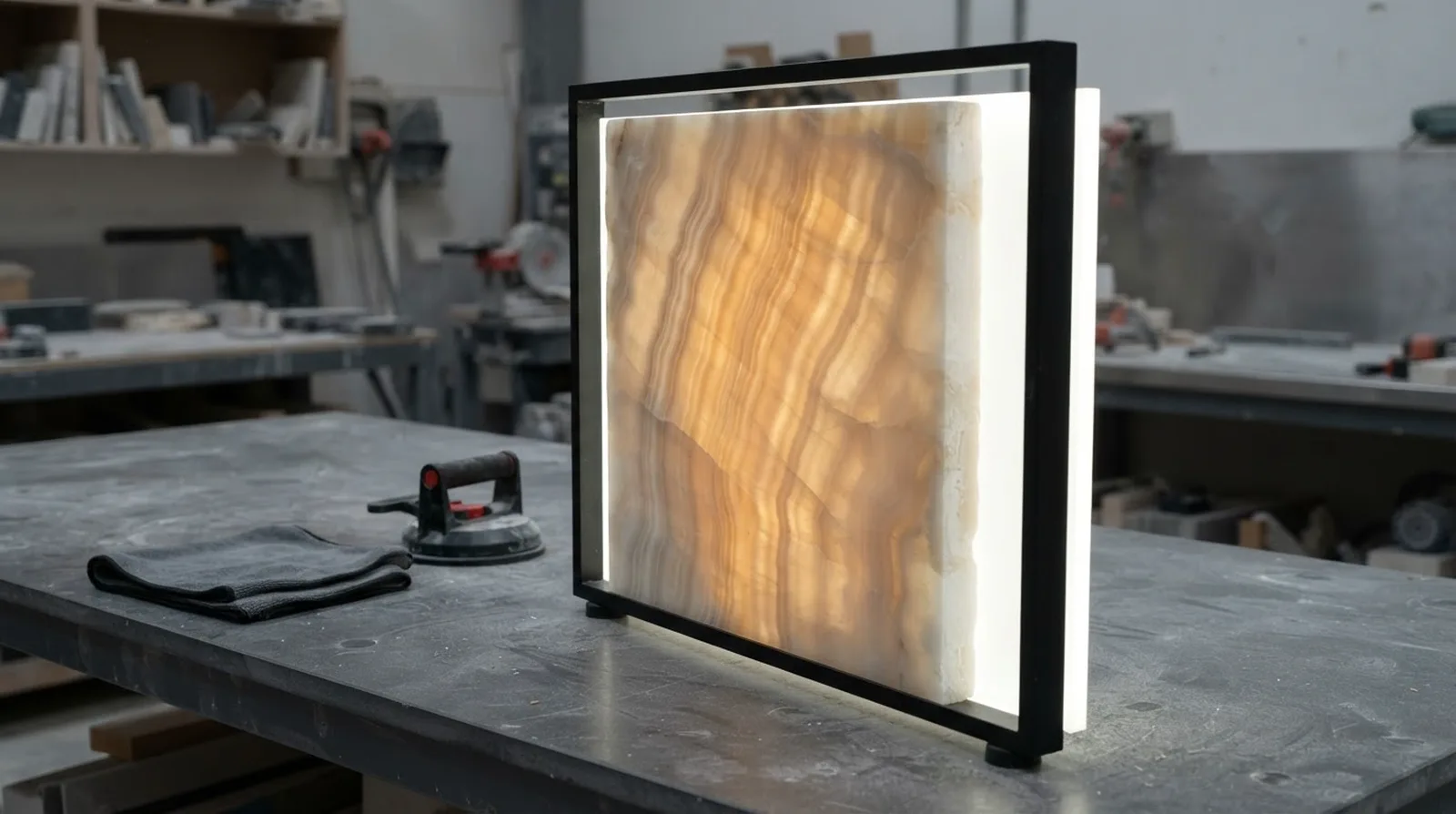
- Use an edge-lit LED flat panel or a densely spaced LED sheet, not a strip of individual LEDs. Strips produce visible scallops.
- Keep at least 40–60 mm between the light source and the stone, plus a diffuser sheet. Less than that and every diode shows through as a hotspot.
- Line the cavity in matte white so the light bounces evenly instead of pooling.
- Specify one colour temperature and stay with it. 2700–3000 K flatters amber and honey onyx; 3500–4000 K keeps green and white onyx from going yellow.
- Use a high-CRI source (90+). Low-CRI LEDs flatten the mineral colour that you paid for.
- Put it on a dimmer. The correct level is almost always lower than the installer's default.
- Plan access. Something behind that wall will eventually need replacing.
The three mistakes
1. Hotspots
The most common failure, and always the same cause: the light source is too close to the stone, or it is a strip rather than a sheet. The wall reads as a grid of bright dots behind a slab. It cannot be fixed with a dimmer it needs the gap or the diffuser it should have had.
2. Ignoring the unlit state
In daylight, in a hotel lobby or a home bar, the panel is off as often as it is on. Unlit onyx is a pale, chalky, low-contrast stone. If the design only works illuminated, it fails half the time. Choose a slab whose dry, unlit appearance you would accept as a finish on its own.
3. Joints that fight the banding
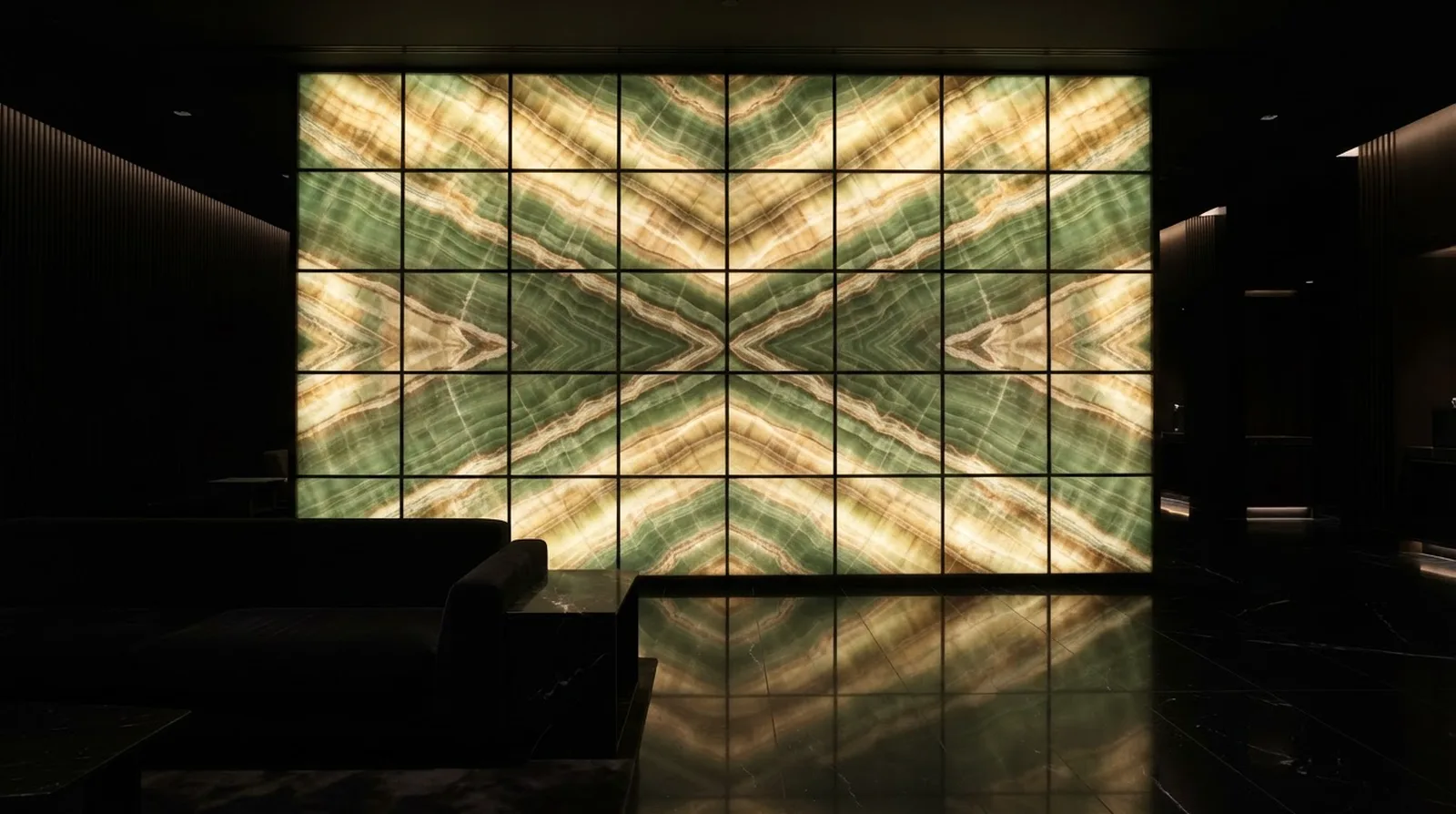
Backlighting makes every joint visible as a dark line, so the joint grid becomes part of the composition whether you designed it or not. Set the panel module to the book-match pattern, keep the joints tight and consistent, and let the grid be deliberate.
Book-matching onyx
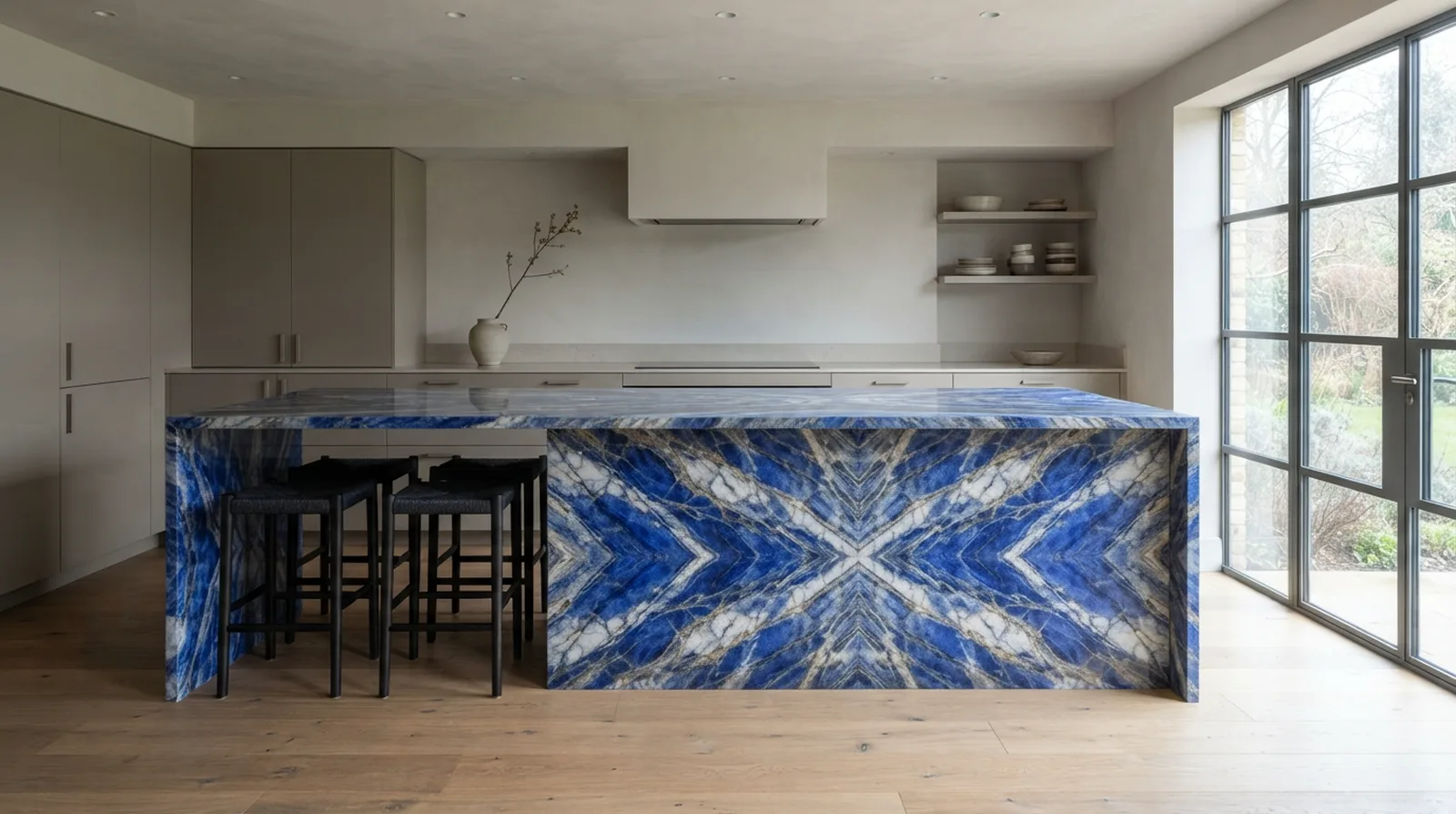
Onyx bands in strong parallel layers, which makes it the most rewarding stone to book-match. Two adjacent slabs opened like a book give a mirrored butterfly; four give a full symmetrical panel. This has to be planned at the block, and the fabricator needs the elevation drawing before cutting not after.
Where onyx belongs
| Application | Verdict | Note |
|---|---|---|
| Backlit feature wall | Ideal | The reason onyx is specified |
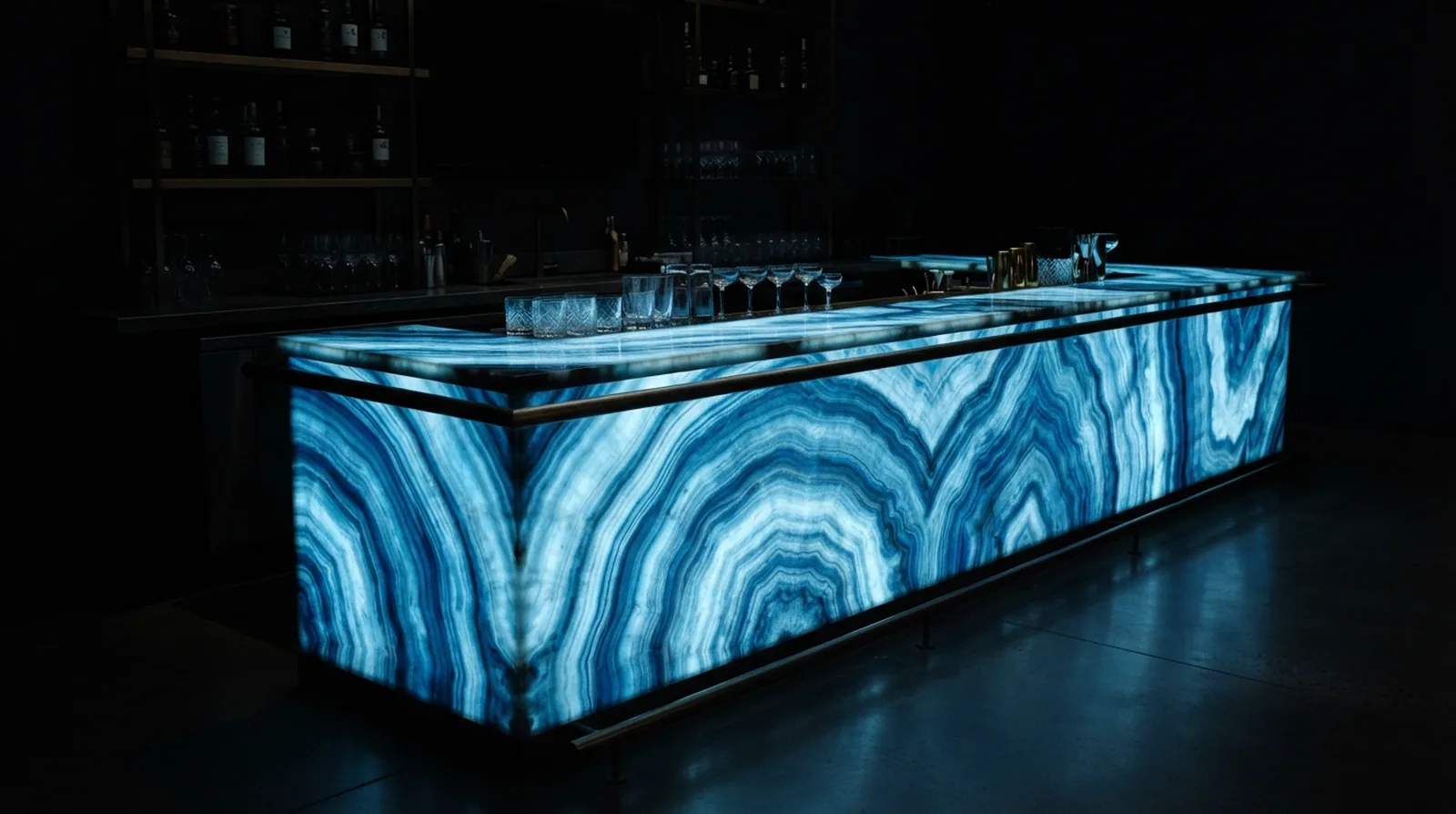
| Bar front / counter face | Ideal | Use a harder stone for the top surface |
| Reception desk face | Ideal | Plan the unlit appearance |
| Bathroom vanity front | Good | Vertical only, sealed, away from standing water |
| Decorative panel or screen | Good | Laminate thin onyx to glass |
| Kitchen countertop | No | Too soft, too porous, etches instantly |
| Flooring | No | Will not survive foot traffic |
| Anything outdoors | No | Weather and UV both attack it |
Living with it
Seal it on installation and re-seal on the supplier's schedule. Clean with a pH-neutral stone cleaner only onyx is calcite, so anything acidic will etch it, and that includes most bathroom and glass sprays. Wipe spills immediately. Never use an abrasive pad.
Frequently asked questions
- How thick should backlit onyx be?
- 10–12 mm laminated to a backing gives the brightest, most even glow. 16–20 mm is the practical choice for self-supporting bar fronts and counter faces. Above 20 mm the glow drops off sharply.
- What causes hotspots behind an onyx panel?
- A light source too close to the stone, or individual LEDs rather than an even sheet. Allow 40–60 mm of air gap plus a diffuser, use an edge-lit flat panel, and line the cavity in matte white.
- Can any onyx be backlit?
- No. Translucency varies between blocks and within a single slab. Always test with a light behind the exact slab you are buying, and photograph the result that photograph is what your wall will look like.
- Is onyx suitable for a kitchen countertop?
- No. It is soft, porous and etches on contact with kitchen acids. Use it as a vertical decorative element and specify granite or quartzite for the working surface.
- What colour temperature should the LEDs be?
- 2700–3000 K for honey and amber onyx; 3500–4000 K for green, white and blue onyx, which go muddy under warm light. Use a high-CRI source and put it on a dimmer.